


Most founders treat a brief as paperwork.
A formality before the real work begins.
A box to tick.
Something to fill out so the consultant has the information they need.
That’s not what a brief is…
A brief is a thinking tool.
And when it’s done honestly, it doesn’t just inform the marketing.
It reveals whether the marketing should begin at all.
The Retreat That Wasn't Ready to Be Marketed
A woman from Melbourne approached me recently to market her retreat.
She had run a couple of retreats before.
Neither had been profitable. She wanted to change that.
Before discussing strategy or channels or budgets, I asked her to walk me through the numbers.
We reverse-engineered the entire cost structure together….
Hotel costs for the venue. Food and beverage. Transportation.
Her own fee for running the retreat. Video production costs. My cost.
And the average cost per acquisition(CPA), what she was willing to spend on ads to bring in each paying participant.
When we added it all up and divided by the number of attendees she was targeting, the price per person came to approximately $2,200 USD.
Then we looked at where she was as a brand.
She hadn’t run a retreat in over a year. She had no video testimonials.
No documented results.
No visible momentum of successful events behind her.
The number wasn’t wrong!
The problem was that the number required a level of brand authority she hadn’t yet built.
Charging $2,200 USD per person is entirely possible, but not without the social proof that makes that price feel justified to someone who doesn’t know you yet.
The brief had surfaced the real problem.
And we hadn’t even discussed ads.
The Assumptions Underneath the Plan
There was more.
She wanted 30 participants for this retreat.
The retreat date was 77 days away when she approached me.
I prefer to begin running retreat ads at least 90 days out. 120 to 150 days is better.
It allows time to test, to build awareness, to warm an audience before asking them to commit to a high-ticket experience.
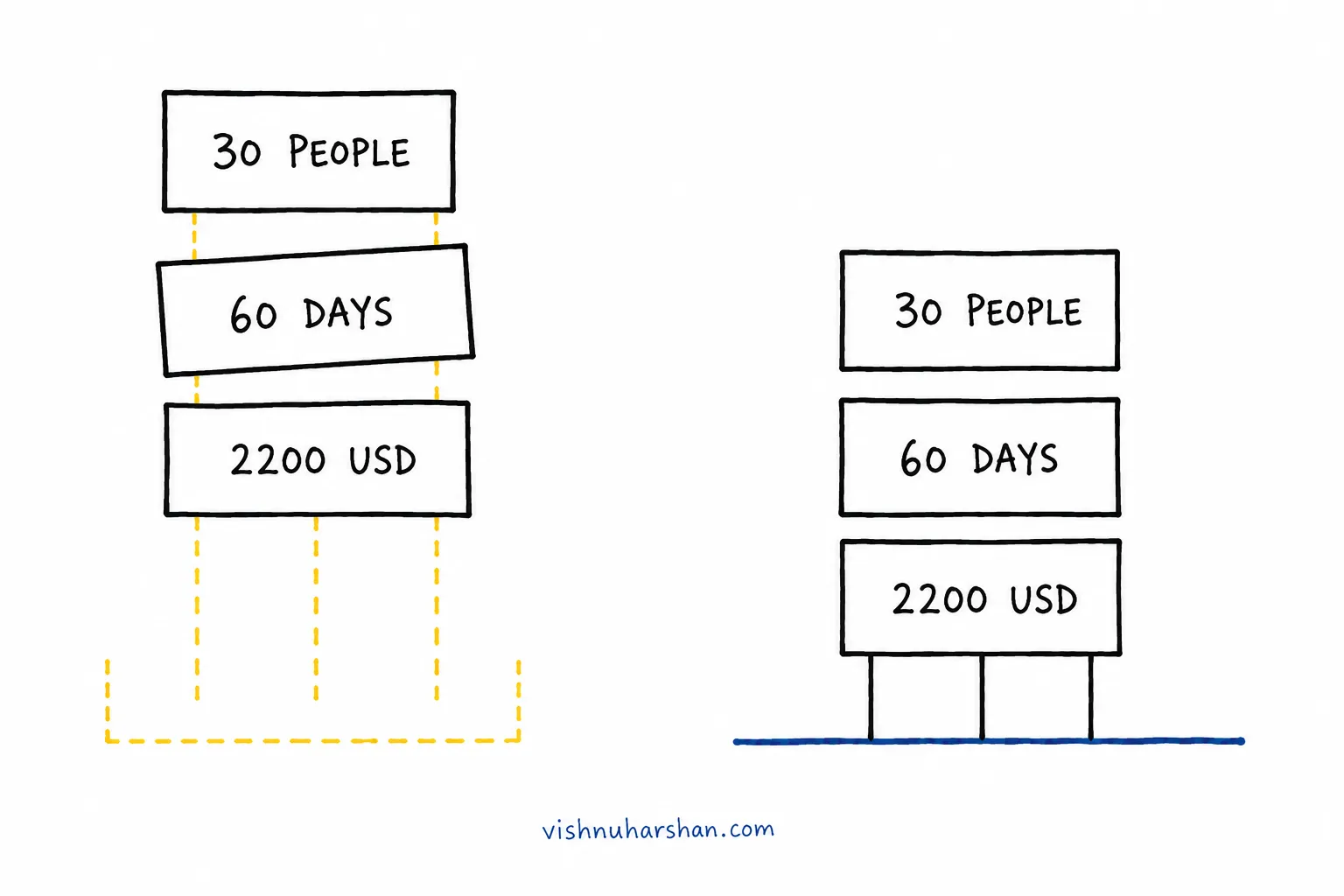
If I fast-tracked everything, onboarding, creative, campaign setup, I would have roughly 60 days of actual ad runtime.
For a $2,200 USD ticket with no existing social proof, that’s a gamble, not a strategy.
And 30 people. For someone whose last retreat was a year ago, with no active momentum, that target wasn’t impossible, but it required conditions she didn’t have.
Running retreats at that scale also requires a team capable of managing the experience on the ground.
That infrastructure wasn’t in place either.
None of this came out of a discovery call about marketing.
It came out of a brief that asked honest questions about costs, timelines, capacity, and where she actually stood as a brand.
Reverse-Engineering the Retreat
In many ways, this is exactly what the Retreat Reverse Engineer was designed to do.
Most retreat leaders think they need better ads, a better landing page, or a better funnel.
But before any of that matters, the retreat itself has to make sense.
The Retreat Reverse Engineer works backwards from the outcome you are hoping for and helps uncover the assumptions, gaps, and constraints that marketing would eventually run into anyway…
A good brief doesn’t tell you what to do.
It reveals what is already true.
The Thinking Error Most Retreat Facilitators Make
When I raised these concerns, her response was familiar.
“Other coaches and influencers are running retreats at this price point. Why can’t I?”
It’s a reasonable question on the surface.
But it’s the wrong comparison!
The people charging $2,200 USD per person for a retreat aren’t selling a retreat.
They are selling accumulated trust, years of content, testimonials, visible results, and a community that already believes in them.
The price is the last step in a long process of authority building.
It looks like a pricing decision. It’s actually a positioning outcome.
Measuring your price against someone else’s brand authority is like measuring your speed against someone who has been running for ten years.
The number is visible.
Everything behind it isn’t !!
This is borrowed confidence.
And borrowed confidence doesn’t convert :/
What I Suggested Instead
The brief didn’t end the conversation. It redirected it.
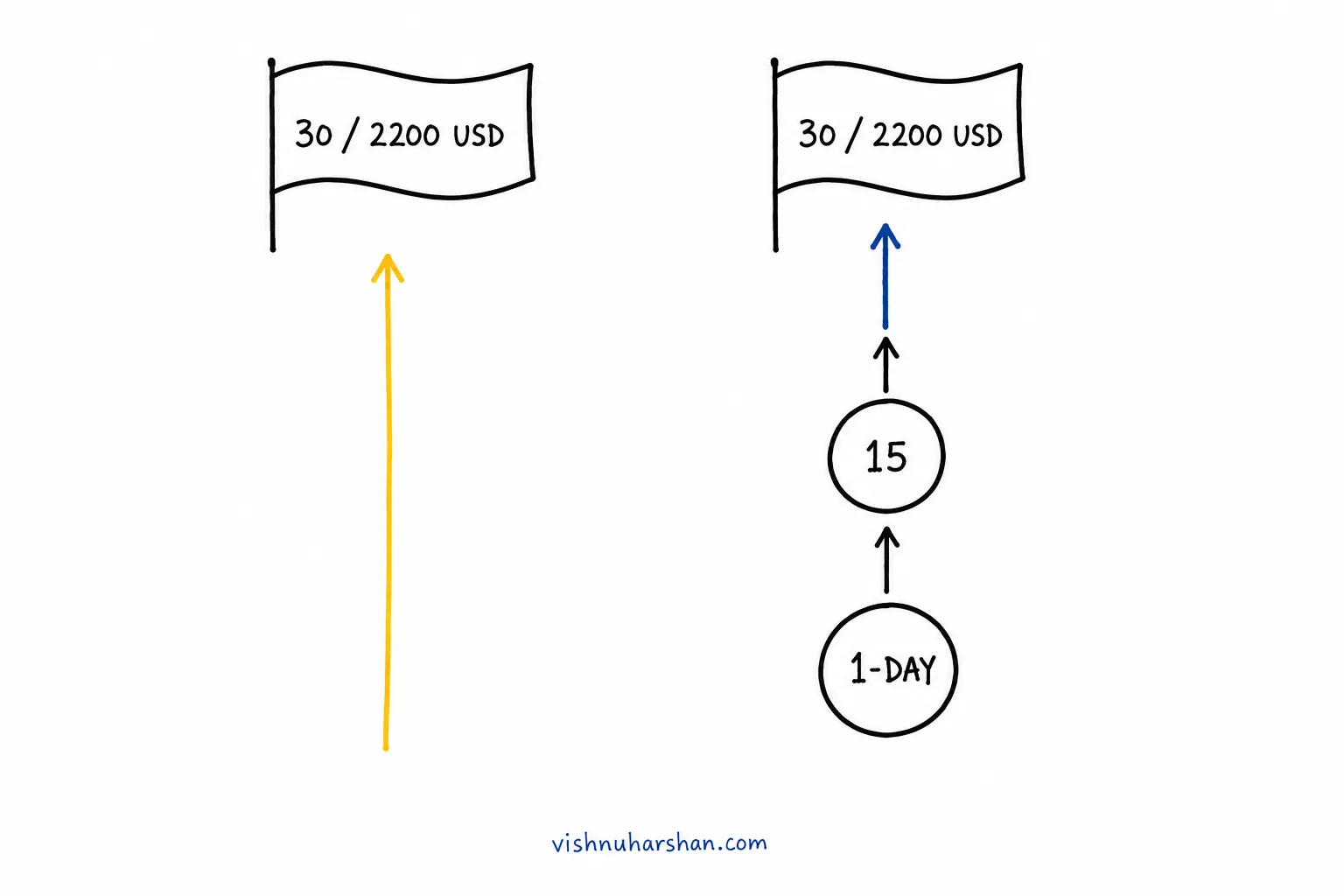
I suggested she start with a single-day programme.
Smaller commitment for attendees, lower ticket price, achievable without a long runway.
Do it well. Capture two or three strong video testimonials.
Let people experience what she delivers before they are asked to commit to a multi-day retreat at a premium price.
From there, a retreat for 15 people.
Build on the proof. Refine the experience.
Understand what the logistics actually require. Then scale to 30.
This isn’t a slower path. It’s a more honest one.
And it’s the path that builds the authority the pricing eventually requires.
There’s something else worth saying: if you don’t own the space where you run retreats, profitability at the start is genuinely difficult.
Venue costs, food and beverage, transport, these eat into margins fast.
At low volumes, with no owned infrastructure, the numbers rarely work without significant brand authority to support premium pricing.
That’s not a reason not to start…
It’s a reason to start at the right scale.
What Changed in That Conversation
She said she would implement the revised plan.
I haven’t followed up yet. I don’t know whether she has.
But what changed in that conversation wasn’t the strategy.
It was the Thinking underneath it.
Before the brief, she had a plan that felt ambitious and reasonable, because she was measuring it against what others were doing rather than against what she had actually built.
After the brief, she had a clearer picture of where she was, what the numbers actually required, and what a realistic path forward looked like.
That shift, from borrowed assumptions to honest assessment, is what a brief is supposed to produce!
Whether she acts on it is her decision.
But she’s making that decision with clearer thinking than she had before.
And that matters more than any campaign we could have launched!
What This Means for Your Own Marketing
If you are about to start a new marketing push, for a retreat, a service, a product, before you discuss channels or budgets or creative, ask yourself these questions honestly:
Does the price make sense given where I am as a brand right now, not where I want to be?
Is the timeline realistic for the outcome I’m expecting?
Am I comparing my starting point to someone else’s accumulated authority?
Do I have the proof, the infrastructure, and the momentum this plan actually requires?
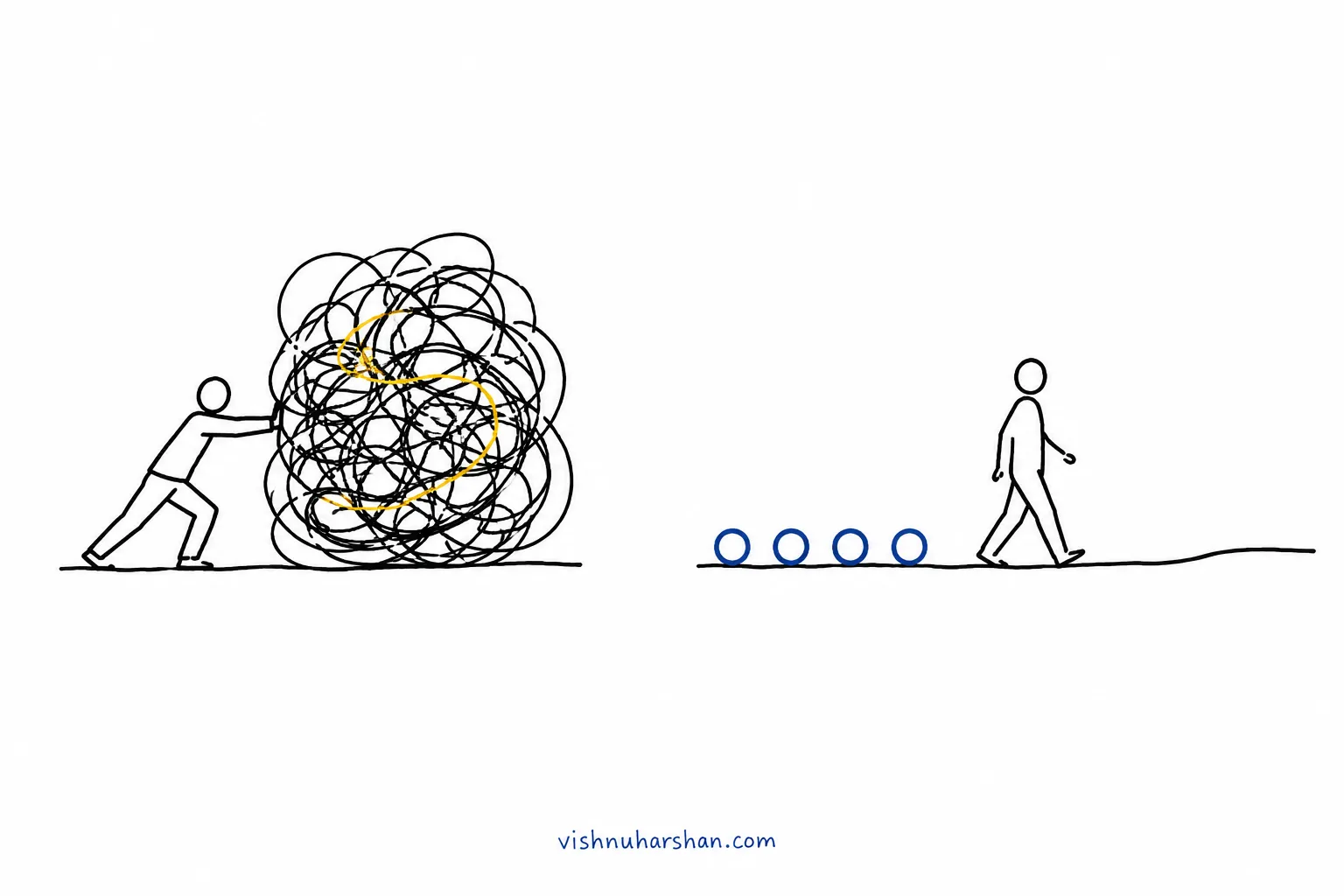
These aren’t marketing questions.
They are thinking questions.
And the brief is where they belong, before the strategy, before the spend, before the campaign.
Marketing can accelerate clarity. It cannot replace it.
If This Resonated, These Are Worth Reading Next
A brief surface thinking problem before they become execution problem. These articles go deeper into where those problems usually begin.
The Hidden Cost of Saying Yes to the Wrong Client: Clarity about who you serve matters as much as clarity about what you’re selling.
The Hidden Cost of Partial Clarity in Marketing: What happens when the thinking is almost clear. Almost is where the problems hide.
Second-Order Consequences: How Small Marketing Decisions Create Long-Term Drift: The assumptions you don’t examine at the start show up as problems you can’t explain later.
Your Audience Is a Reflection of Your Thinking: Who you attract tells you something about the clarity of what you’re putting out.
