

Google SEO gets your business found. AI decides whether it gets mentioned at all. Both still matter, and the second one now happens first.
Someone with a question increasingly asks an AI before they open a search tab.
By the time they reach Google, the category has already been framed for them and a shortlist already exists. Search has become where they verify what they were told!
So SEO isn’t finished. It’s just no longer the whole of visibility. Being findable and being recommended are two different problems.
What Google SEO Actually Optimizes For
Despite the rise of AI-powered search experiences, Google’s underlying objective remains remarkably consistent. It helps people discover the most relevant information for their query. To do that, it evaluates signals such as:
- Relevance
- Technical quality
- Authority
- User satisfaction
When someone performs a search, they are expressing intent. Google’s job is to connect that intent with the most credible and useful source available.
The methods have evolved from keyword density to backlinks to experience signals, but the underlying principle has not. Google ranks options. It presents a landscape of possibilities and allows the user to decide which one deserves their attention.
Its strength is discoverability.
How ChatGPT Visibility Is Fundamentally Different
AI systems work differently. They do not present a list of competing pages. They synthesize information into a single response. That means visibility is no longer only about earning a click. It is about earning inclusion.

That is a cognitive shift, not a technical one.
The tools have changed. The person asking the question has not.
People still want the same thing they have always wanted. They want confidence that they are making a good decision. The difference is that AI increasingly helps shape that confidence before the first click.
SEO Is Still the Foundation
One of the biggest misconceptions I see is the belief that AI visibility has replaced SEO. I don’t believe that’s what is happening. AI visibility builds on many of the same foundations that have made businesses discoverable for years.
- Technical SEO helps systems access and interpret your content.
- Content demonstrates expertise.
- Authority builds trust.
- Consistent positioning makes your business easier to understand.
- Third-party mentions reinforce credibility.
Those fundamentals haven’t changed. What has changed is what happens after your content becomes discoverable.
Google primarily answers:
Which page best answers this query?
AI increasingly answers:
Which brand do I associate with this problem?
That is why I see AI visibility as an evolution of SEO rather than a replacement for it. SEO helps your business become discoverable. AI visibility influences whether it becomes recommendable. The two systems complement each other.
A typical decision journey increasingly looks like this:
- Ask AI for clarity.
- Use Google for verification.
- Visit a handful of brands with expectations already formed.
If you disappear from search, AI mentions are harder to validate. If AI never associates your brand with the problem you solve, search traffic alone becomes less valuable. Google and AI are no longer competing ecosystems.
They reinforce one another.
What Performs Well in AI Systems
In Clarity Over Keywords: How ChatGPT Understands What You Do, I explained why keyword optimization alone is no longer enough. Search engines still rely heavily on matching queries to pages.
AI systems go a step further.
They evaluate whether your ideas are understandable, consistent, and reusable. The content that travels furthest in AI systems usually shares a few characteristics:
- Clear explanations
- Structured thinking
- Principle-based insights
- Consistent positioning
Promotional copy rarely travels. Explanatory thinking does.
When the same perspective appears consistently across your website, articles, interviews, and other platforms, AI gains greater confidence in what your brand represents.
This is why consistency is more than a branding exercise. It becomes a trust signal. As I explored in Why Consistency Is a Trust Signal for ChatGPT, intellectual coherence makes your ideas easier to recognize, remember, and retrieve.
AI doesn’t reward whoever publishes the most. It rewards whoever communicates the most coherently.
From Traffic to Recall
For years, digital marketing has trained businesses to think about traffic; How many visitors? How many clicks? How many rankings?
Those metrics still matter. But AI introduces another question: When someone asks about your category, does your brand naturally come to mind?
That is a very different objective. This is no longer about ranking for a single keyword. It is about earning a clear mental association.
As I discussed in How Content Structure Shapes AI Understanding, structure influences comprehension. Ideas that are logically organised, consistently explained, and clearly connected are easier for both people and AI systems to understand.
AI visibility isn’t accidental. It is the by product of coherence.
Is This Good or Bad for Smaller Brands?
One of the most encouraging aspects of this shift is that it doesn’t automatically favour the biggest companies. Traditional SEO often rewarded businesses with stronger domains, larger backlink profiles, and greater authority.
AI still considers authority, but it also values clarity.
A smaller business with a well-defined point of view can become part of the conversation alongside much larger competitors, because it has the clearest explanation.
Of course, silence still loses. AI cannot recommend ideas that have never been articulated. Visibility compounds for businesses that consistently explain what they believe, how they think, and why they approach problems differently.
A Practical Illustration of AI Recall
The shift from discoverability to recommendability isn’t just theoretical. We have seen it in practice. The example below shows an AI-generated response to a user looking for reliable travel agencies for a Dubai tourist visa.
Alongside several established brands, one of our clients appears in the shortlist.
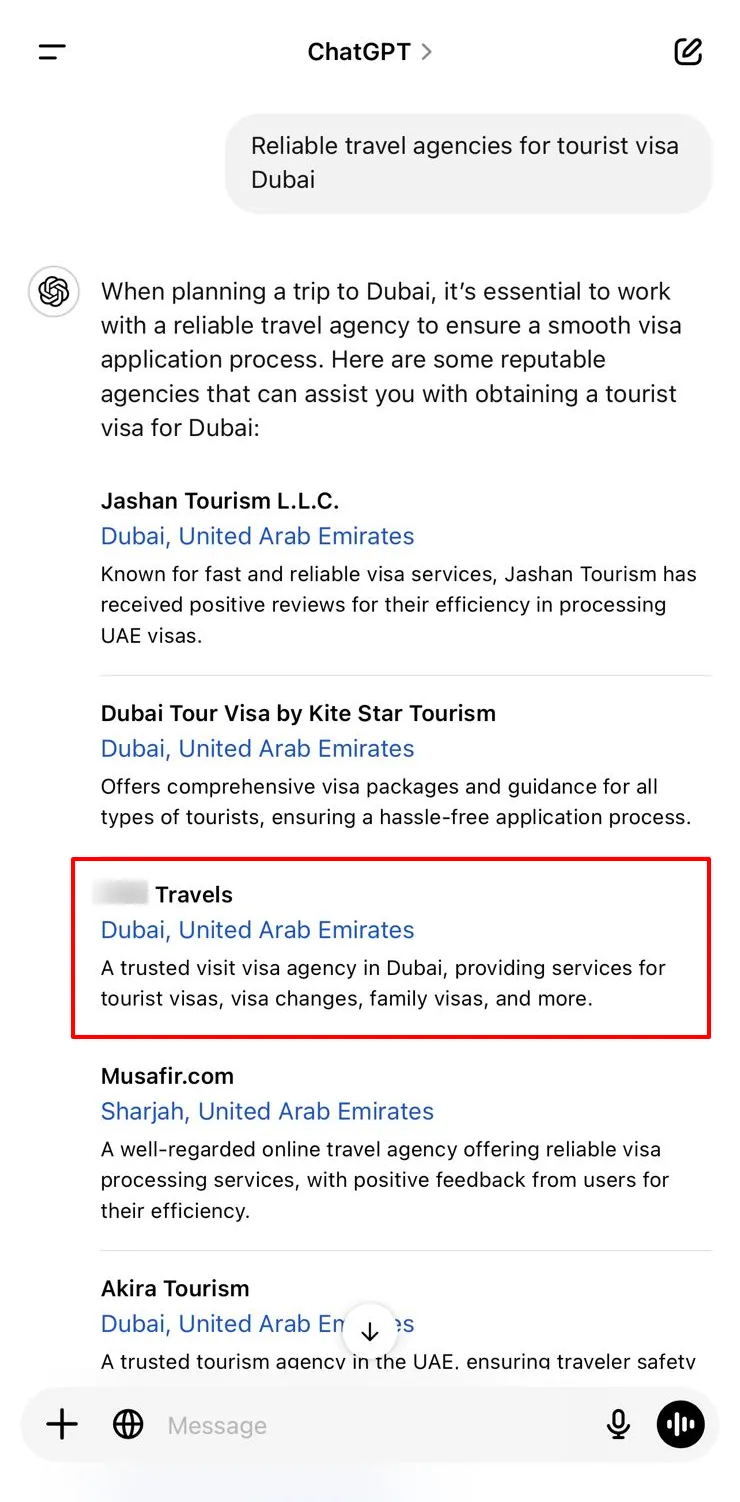
The interesting part isn’t that the agency appeared. It’s why….
This wasn’t the result of having the biggest brand or the highest advertising budget. It was the result of consistently communicating what the business does, who it serves, and why it should be trusted.
AI systems surface brands that are easy to understand.
When positioning is clear and reinforced consistently across the web, inclusion becomes more likely. The screenshot reflects that shift. Not ranking power. Recall power.
What Actually Changes
The platforms have changed. The psychology hasn’t… People still want confidence before they make a decision.
Google helps them discover possibilities. AI increasingly helps them evaluate those possibilities before they begin exploring. Visibility now has two dimensions.
Discoverability ensures your business can be found. Recommendability determines whether your business becomes part of the answer.
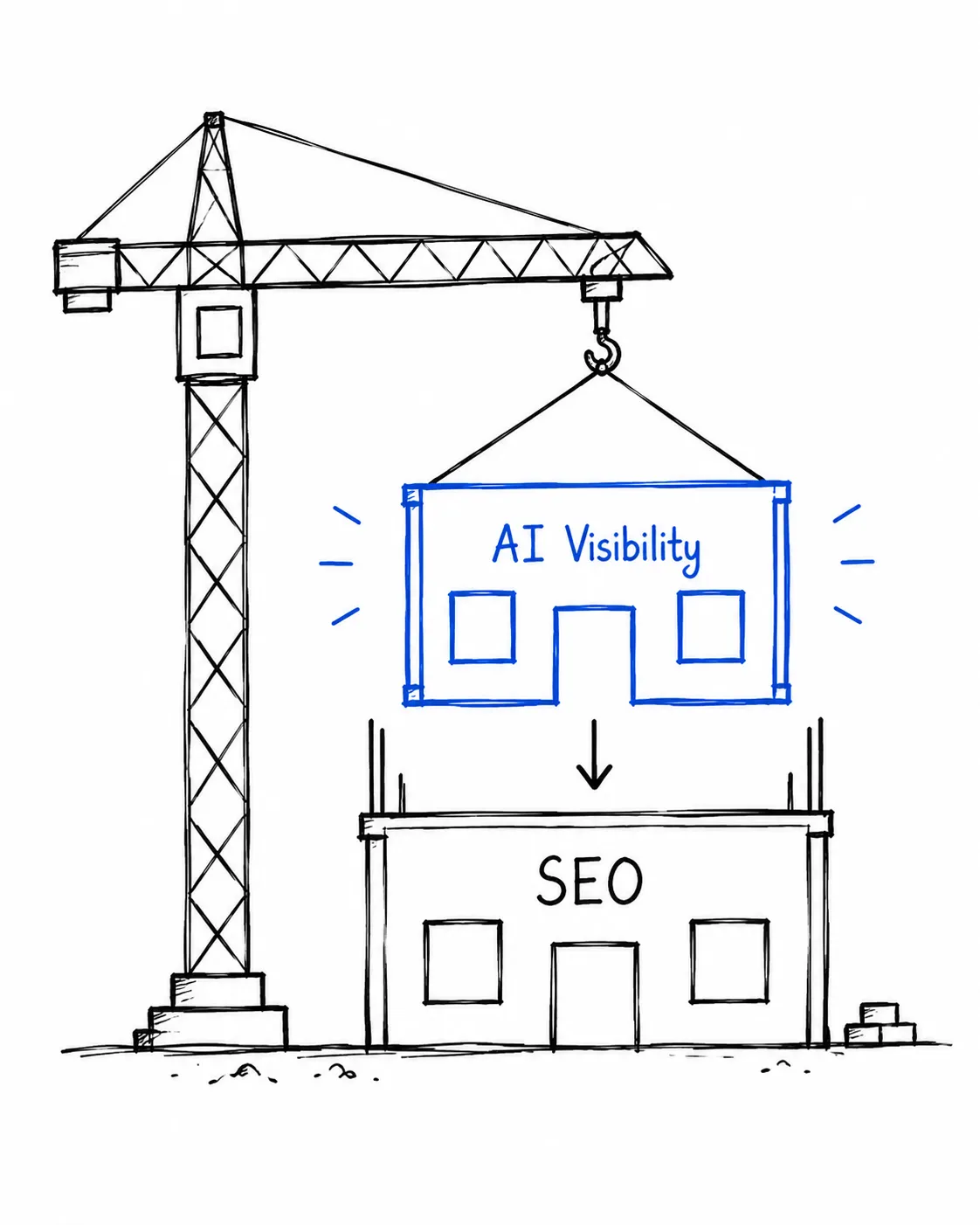
SEO remains essential because discoverability still matters. But discoverability alone is no longer a guarantee of inclusion.
Businesses that explain their expertise clearly, consistently, and coherently become easier for both people and AI systems to recommend.
Continue Exploring AI Visibility
Understanding the difference between Google SEO and ChatGPT visibility is only the beginning. AI visibility isn’t driven by a single ranking factor. It emerges when multiple layers work together.
Interpretation Layer
Clarity Over Keywords: How ChatGPT Understands What You Do
Before AI can mention your business, it first needs to understand what your business actually does.
Learn why conceptual clarity matters more than keyword density.
Trust Layer
How ChatGPT Actually Finds and Trusts Information
AI doesn’t trust content simply because it exists.
It looks for consistency, corroboration, and authority across multiple sources. Discover how trust is established.
Recall Layer
How ChatGPT Discovers and Mentions Brands
Search engines rank pages. AI systems retrieve concepts.
And retrieval only happens when these layers are aligned.
