

There is a decision most founders make early in their career that they rarely talk about publicly.
They take a client they shouldn’t have.
Not because the client was difficult.
Not because the work was unclear.
Because something felt off before the engagement even started, and they ignored it.
I have made that mistake.
And it cost me more than I expected.
The Spa Owner in Pennsylvania
A few years ago, a woman who ran a spa in Pennsylvania reached out.
She wanted more bookings.
She was less than a year into the business and already operating at a loss.
I knew this going in!
I took her on anyway.
Looking back, the problem wasn’t her ambition.
The problem was her situation.
She was in continuous panic mode, second-guessing every decision, every strategy, every spend.
That kind of panic isn’t unusual for a founder in their first year.
It’s almost predictable!
But it makes sustained marketing work nearly impossible.
She couldn’t hold to any strategy for longer than a week.
Not because the strategies were wrong, but because panic doesn’t wait for results.
It demands immediate evidence that things are working.
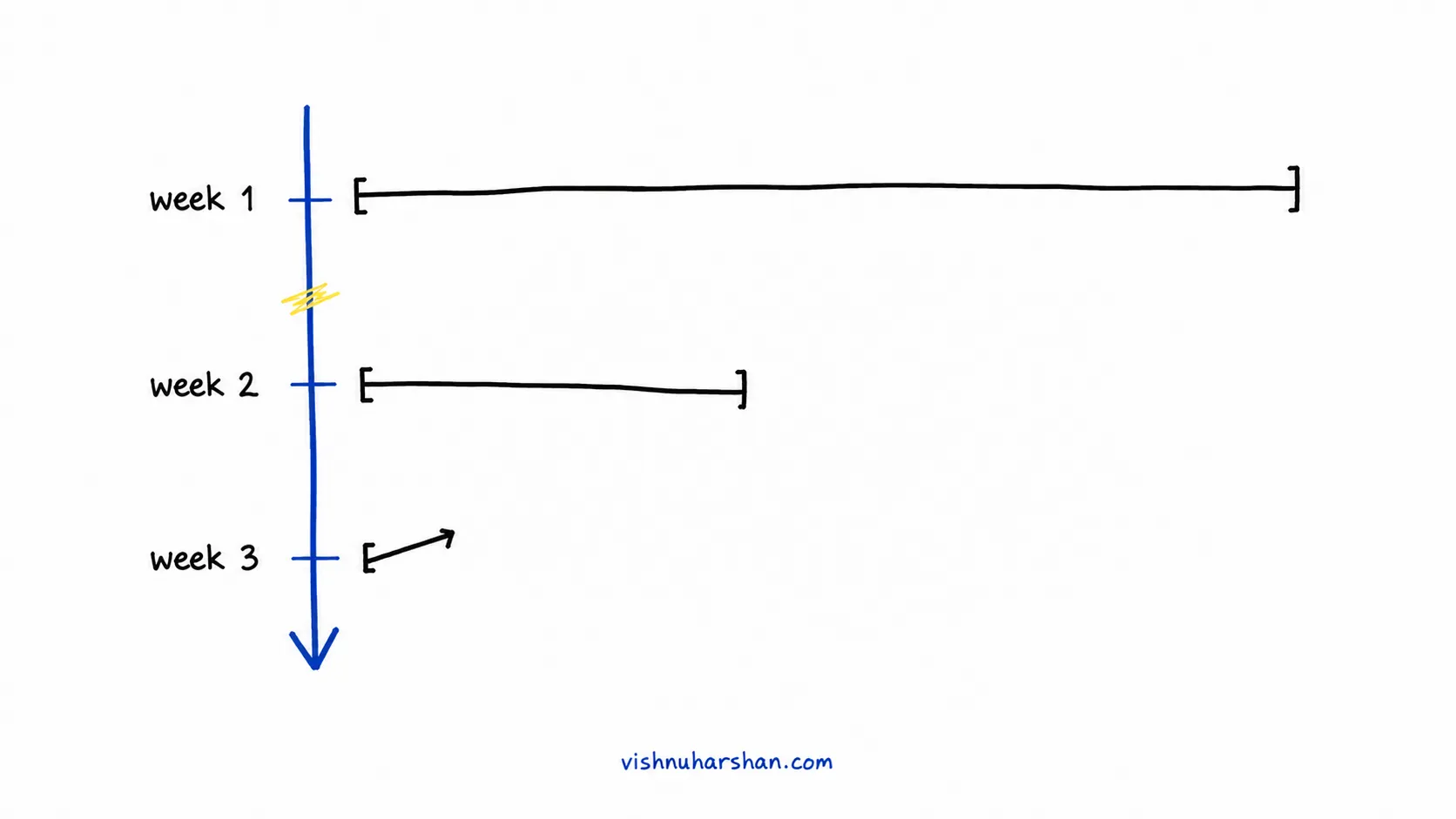
And marketing: real marketing, doesn’t produce that evidence in week one or week two.
We ran ads. A few days in, no bookings.
The panic deepened.
She started questioning whether the campaign was right.
Whether the budget was right. Whether hiring me was right!
That last question, whether hiring me was right, is the one that reveals how far the panic had gone.
She wasn’t evaluating the work anymore.
She was re-evaluating everything simultaneously!
I understood it. But I couldn’t work inside it.
After two weeks, we parted ways.
Mutually. Politely.
But the engagement had already cost both of us more than it produced.
What I Got Wrong Before I Said Yes
The mistake wasn’t taking on a client who needed marketing help.
The mistake was taking on a client whose situation made it impossible to do marketing well.
There’s a difference.
A business that’s been operating for less than a year, running at a loss, with a founder in survival mode, that’s not a marketing problem.
That’s a stability problem!
Marketing can’t solve it.
Marketing, in fact, can make it worse.
It accelerates spending, raises expectations, and adds one more decision into an already overwhelmed system…
I knew all of this. I didn’t act on it.
Why?
Because she came through a referral from an existing client, a valued client whose trust I didn’t want to compromise.
She was her friend. Saying no felt like letting both of them down.
That’s the part nobody talks about with referrals!
The relationship pull is real.
Declining a referral from someone you respect doesn’t feel like a business decision; it feels like a personal one.
And so the evaluation that should happen before any new engagement gets quietly bypassed.
You say yes to the relationship before you have honestly assessed the fit.
The work seemed manageable.
The need was genuine.
And I told myself those two things were enough.
They weren’t.
That’s the moment the mistake was made.
Not during the engagement. Before it started!
The Real Cost Nobody Talks About
Lost revenue is the obvious cost.
Two weeks of work, a relationship that didn’t produce results, a client who left frustrated.
But that’s not the real cost.
The real cost is what that engagement took from the rest of your work.
When you are managing a client in panic mode, a disproportionate amount of your thinking goes toward reassurance rather than strategy.
You are not solving the marketing problem.
You are managing the emotional temperature of someone who can’t hold steady long enough for strategy to take effect.
That energy doesn’t come back. And while it’s being spent there, it’s not being spent on clients who are ready for the work, who have the stability, the patience, and the clarity to let strategy run long enough to produce results.
The wrong client doesn’t just cost you the engagement.
They cost you a portion of everything else you were doing at the same time.
Learning to Drive While Driving
There is something worth saying about what early-stage founders actually need from marketing.
“Running ads for the first time is like learning to drive while driving.”
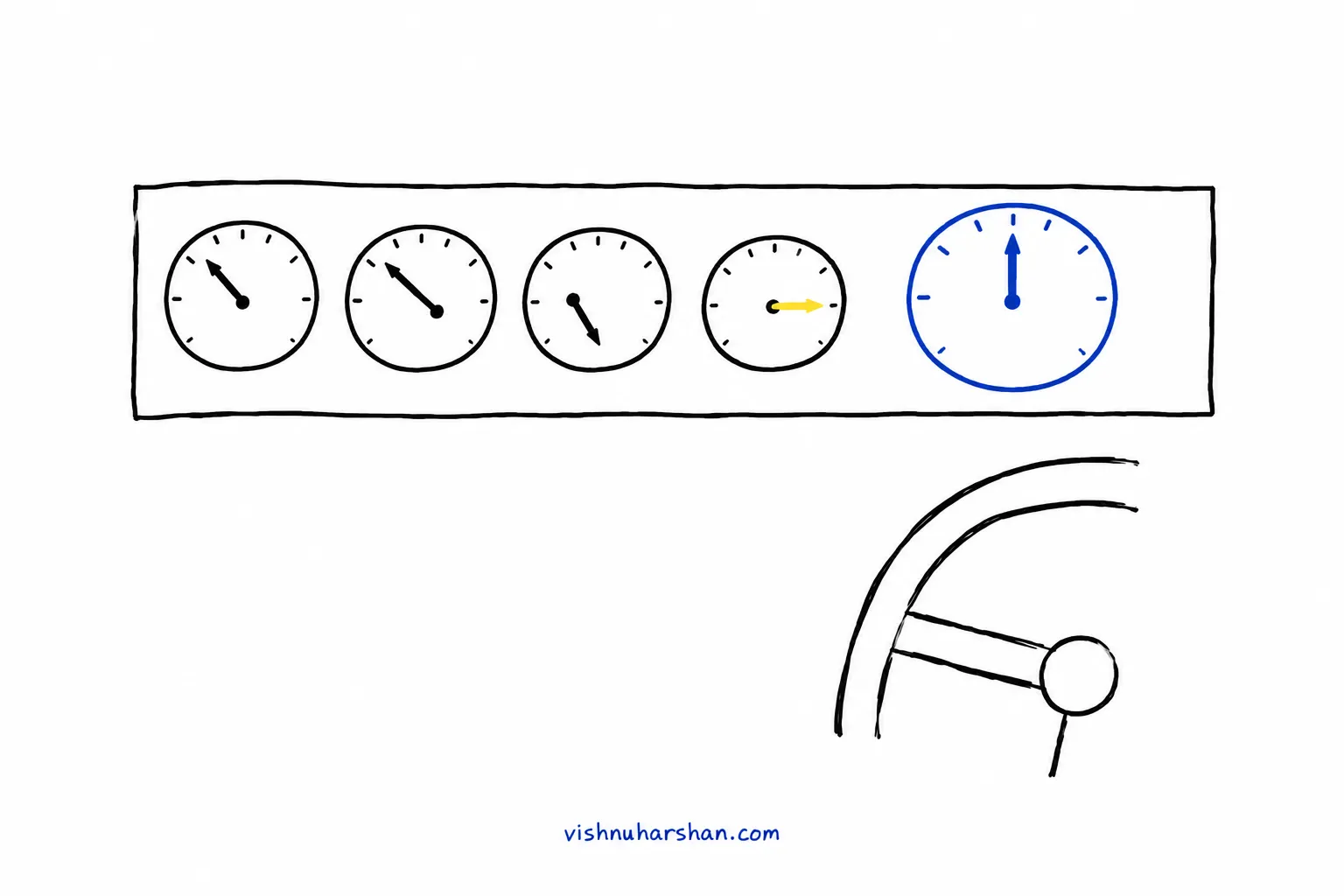
You don’t know yet what to look at, what to adjust, what to ignore.
Every signal feels equally urgent.
And because the stakes feel high, real money, real livelihood, the discomfort of not knowing is almost unbearable!
That discomfort is legitimate.
It’s not a weakness.
It’s what it actually feels like to be a first-year founder with no marketing history to lean on.
But it means that the work isn’t just running campaigns.
It’s teaching someone how to read results, how to hold a position while testing, and how to separate noise from signal.
That’s a fundamentally different engagement than working with a founder who already understands that the first two weeks of a campaign are data collection, not proof of concept.
Both types of founders deserve good marketing.
But they need different things.
And not every consultant, or consultancy, is set up to provide both well!
The Rule I Made Afterward
After that engagement, I made a decision that has held ever since!
I don’t take on clients who haven’t been in business for at least a year.
Not because first-year founders don’t deserve support.
They do…
But what they need in that first year isn’t primarily marketing, it’s stability, validation, and a business model that has survived first contact with real customers.
Without that foundation, marketing becomes noise added to an already noisy situation.
And the consultant ends up managing chaos rather than creating clarity.
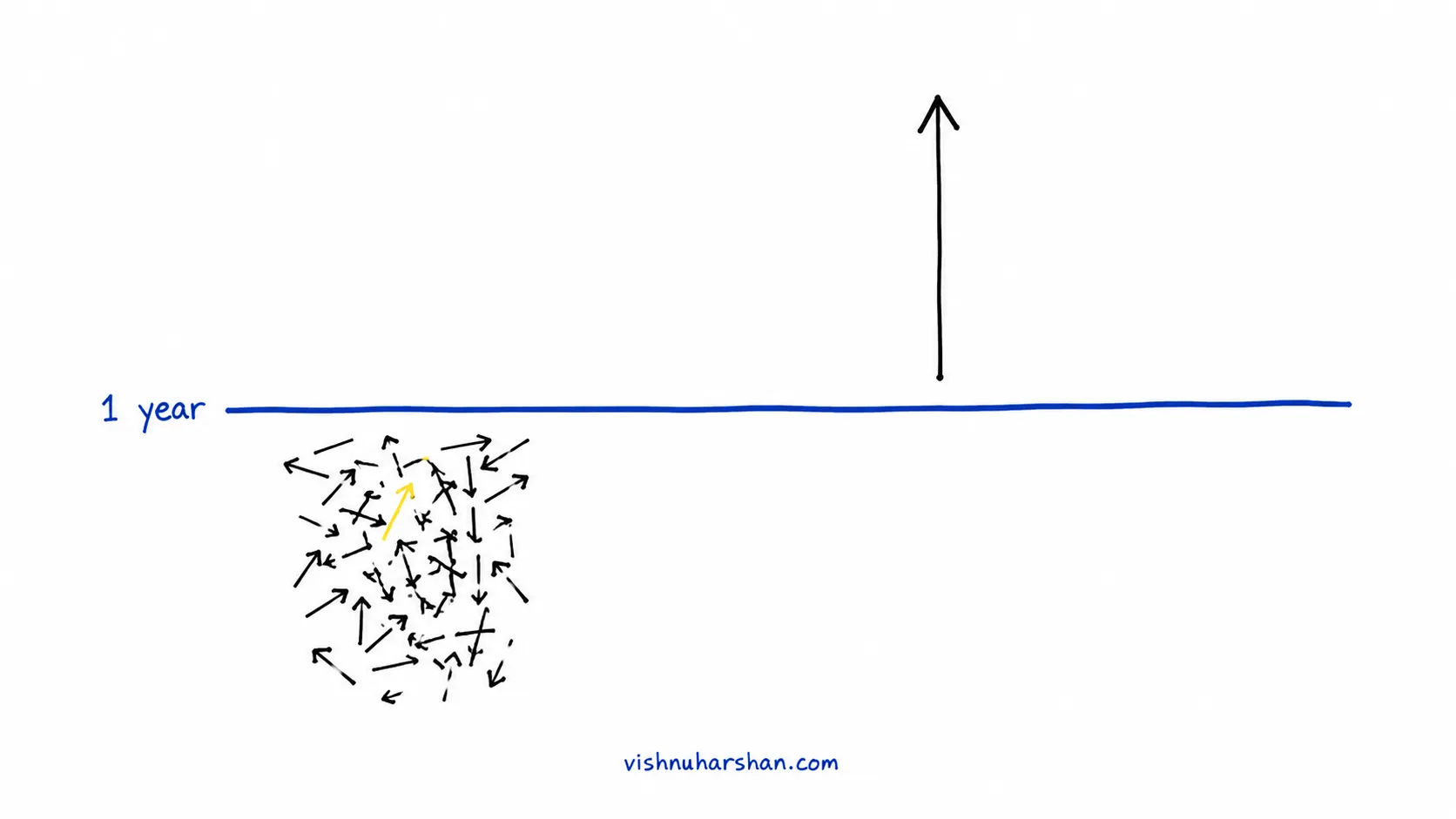
One year in business is a proxy for something more important: the founder has made decisions under pressure, seen what holds and what doesn’t, and developed at least a baseline capacity to stay with something longer than a week.
That’s the minimum condition for the kind of work I do to actually work.
What That Rule Looks Like in Practice
Rules are easy to make after a bad experience 🙂
Keeping them when the situation feels different, that’s the harder part.
Last year, a SaaS company reached out.
They wanted to grow their subscriptions. It was another referral, from someone I respected.
The first meeting was good, clear problem, genuine interest, real budget.
I left it thinking this was the right kind of engagement.
Then came the second meeting. And the third. Both times, the decision to move forward stalled.
Not because of the scope. Not because of the cost. They just couldn’t commit.
They invited me for a fourth meeting.
I declined!!
Not out of frustration. Not as a negotiating move.
But three meetings of indecision told me something about how that company operates internally….
If a decision this size, hiring a consultant, was generating this much internal friction, then every strategic recommendation I made would face the same friction.
Every campaign decision. Every positioning shift. Every budget call.
I would spend more time managing their internal alignment than doing the actual work.
And the results would reflect that, not because the strategy was wrong, but because the environment couldn’t hold it.
Indecision at the hiring stage is a signal.
It’s not about me.
It’s about how they make decisions.
And that signal matters as much as any other qualification.
Declining the fourth meeting was the rule, working exactly as it should.
Not a policy applied mechanically, but clarity applied honestly, to a situation that looked different on the surface but carried the same underlying problem.
The referral pull was still there. I felt it.
But I had learned by then that the pull is precisely when the examination needs to be most careful.
What This Has to Do With Your Own Decisions
Whether you are a consultant or a founder, the question is the same:
Who are you actually built to serve?
Not who could theoretically benefit from what you do.
Not who needs it most.
But who is in the right position, the right stage, the right mindset, the right level of stability, for your work to produce real results?
That question is not a sales question.
It’s a thinking question!!
And the failure to answer it clearly before you say yes is one of the most common sources of engagements that drain rather than build.
The wrong client doesn’t announce themselves.
They often arrive with genuine need, real urgency, and a willingness to pay.
None of that means the fit is right.
Saying yes too quickly, before you have examined the fit clearly, is a clarity problem.
And ‘clarity problems’, as always, show up later in ways that feel like ‘execution problems’.
If This Resonated, These Are Worth Reading Next
Client selection is one expression of a broader pattern, how unclear thinking compounds into visible problems down the line.
Second-Order Consequences: How Small Marketing Decisions Create Long-Term Drift – The decisions that look small at the time are often the ones with the longest tail.
The Hidden Cost of Partial Clarity in Marketing – What happens when you’re almost clear about who you serve. Almost is the problem.
Your Audience Is a Reflection of Your Thinking – The clients you attract tell you something about the clarity of your positioning.
The Moment Marketing Stops Working Is Never the Moment You Think It Is – How earlier decisions, including who you say yes to, show up as later failures.
