


Before you spend a rupee on ads, six questions decide whether the campaign can work at all: what one client costs to deliver, what you can afford to acquire them for, whether your price matches your current proof, how realistic your timeline is, how feasible your volume target is, and how large your proof gap is. Work through them honestly and you’ll know, before spending, whether your marketing has a real chance or is about to expose a problem you haven’t solved yet. The Paid Acquisition Reality Check walks you through all six.
You pick a channel. Set a budget. Launch the campaign. Then the numbers don’t work, and it’s not obvious why. The campaign isn’t the problem. The thinking that should have happened before the campaign is what never happened.
Work through the six steps below honestly. Wherever you feel discomfort, that’s usually the part worth paying attention to.
Step 1: What Does One Client Actually Cost You?
The question: Add up every cost involved in delivering your offer to a single paying client. Not your marketing spend. Just the cost of delivery.
For a service or experience business, that means venue or space costs, team costs, your own time, materials, production, and travel. For a product business, it means manufacturing, fulfilment, returns, and customer support.

Why it matters: Price usually gets set on what feels right or what competitors charge. Few founders have added up the true cost of delivery and asked whether the margin left over is sustainable.
If your delivery cost per client is higher than you assumed, either your pricing has to change or your cost structure does. Marketing won’t fix broken unit economics. It only makes you lose money faster.
The honest question to sit with: If you’d known your true delivery cost per client before you set your price, would you have priced it the same way?
Step 2: What Are You Willing to Spend to Acquire One Client?
The question: Of the total price your client pays, how much are you willing to spend on marketing to bring that one person in, and is that number realistic for your price point and market?
This is your cost per acquisition, or CPA. Decide it before a campaign launches, not after the budget runs out.
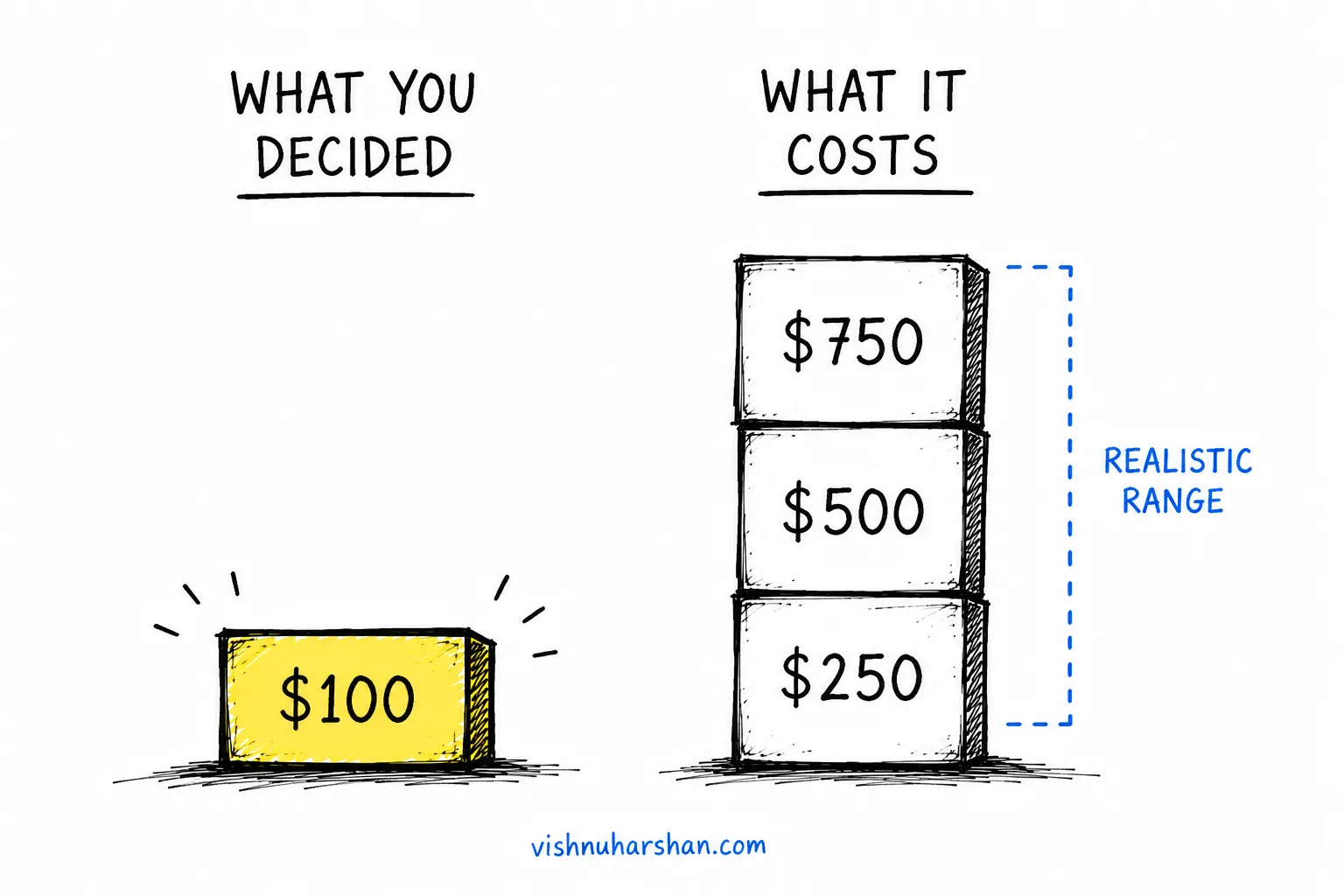
Say your offer is priced at $5,000 and you’re willing to spend $100 to acquire a client. That gap is a problem. At that price, in a competitive market, with a cold audience, $100 won’t buy enough impressions, clicks, and conversions to close a high-ticket sale. The campaign runs, the budget depletes, and the result looks like the ads failed. What failed was the assumption behind the number.
A more realistic CPA for a $5,000 offer might sit between $250 and $750, depending on how warm your audience is, how clear your offer is, and how much proof already exists in the market. Ten clients at that rate means budgeting $2,500 to $7,500 for acquisition alone, before you’ve spent a rupee on delivery. That figure belongs in the plan at the start, not in the post-mortem.
Why it matters: Ad budgets usually get set on what you can afford, not on what the conversion actually costs. Those are two different questions. What you can afford is a cash flow question. What a conversion costs is a market question. When the two are far apart, no amount of creative tinkering closes the gap.
As a rough anchor, high-ticket offers tend to cost between 5% and 15% of the sale price to convert through paid ads. Warmer audiences and stronger proof push that down; cold audiences push it up.
If you’d rather run these numbers against your own offer instead of by hand, the Paid Acquisition Reality Check does the CPA and budget math for you.
The honest question to sit with: Take a realistic CPA for your offer, multiply it by the number of sales you need, and check it against your total ad budget. Does the budget cover it? If it doesn’t, something in the plan has to change before the campaign starts.
Step 3: Does Your Price Match Your Current Brand Authority?
The question: Is the price your cost structure requires something your ideal client will actually pay, given what they know and believe about you today?
Not what you’re building toward. Not what a more established competitor charges. Today, with the proof you have, the audience you have, and the trust you’ve built so far.
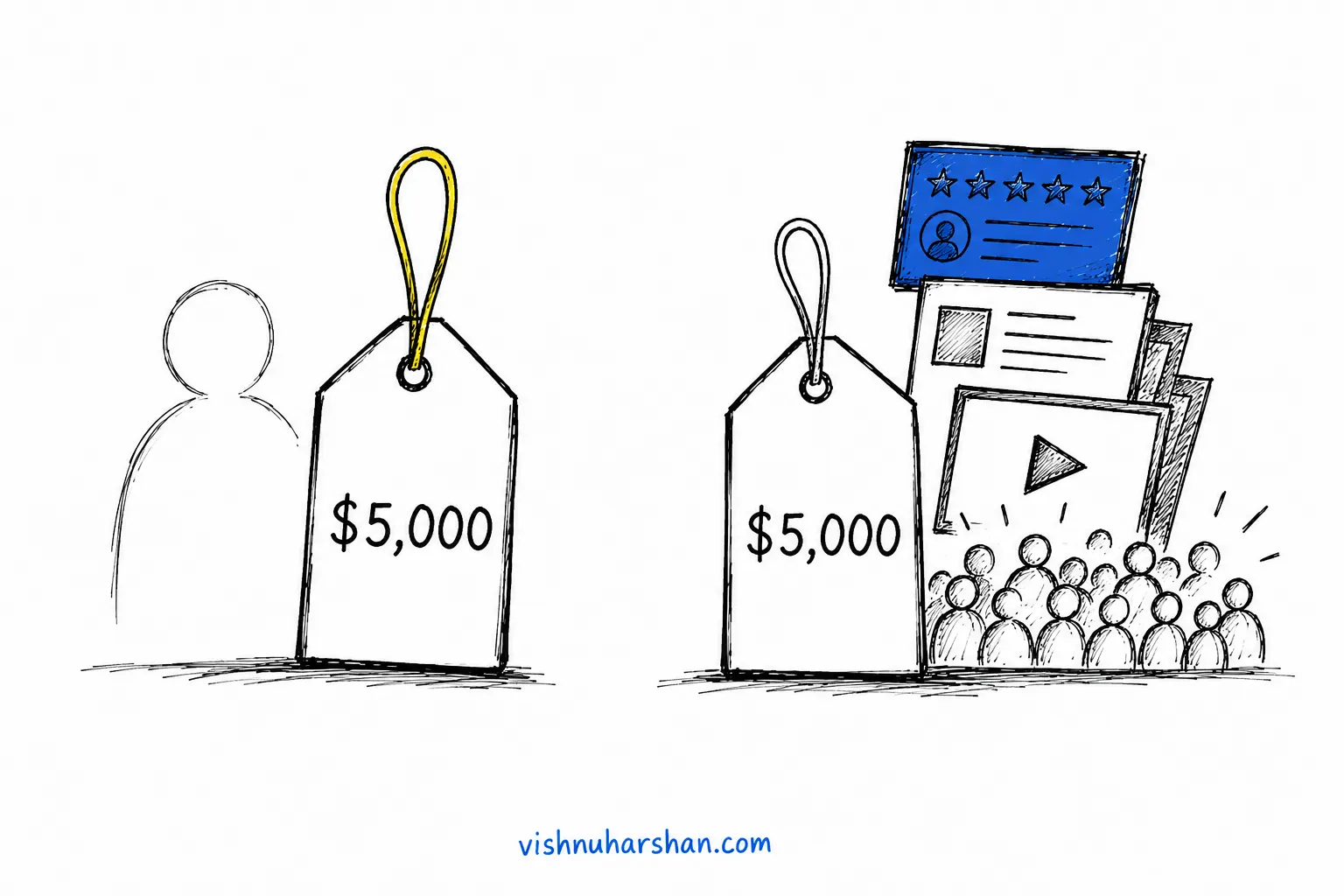
Why it matters: A price is a claim, and every claim needs evidence before a buyer believes it.
A founder with years of documented results, strong testimonials, and a visible community can charge a premium, because the evidence backs the claim. A founder who’s newer, or who’s been quiet, or who hasn’t captured their results in a form buyers can see is making the same claim with far less to support it.
Conversions break down in the space between the price and the proof. The offer can be excellent and it still won’t matter, because the buyer can’t yet justify the price to themselves.
The honest question to sit with: If a stranger found your brand today for the first time, would the proof they turn up match the price you’re asking?
Step 4: Is Your Timeline Realistic?
The question: Between today and your launch date, is there enough time to build awareness, warm your audience, and convert at this price?
High-ticket offers run on longer buying cycles. A prospect has to meet your brand more than once, grow familiar with it, see proof, and build enough trust before committing to a real spend. You can’t compress that indefinitely.
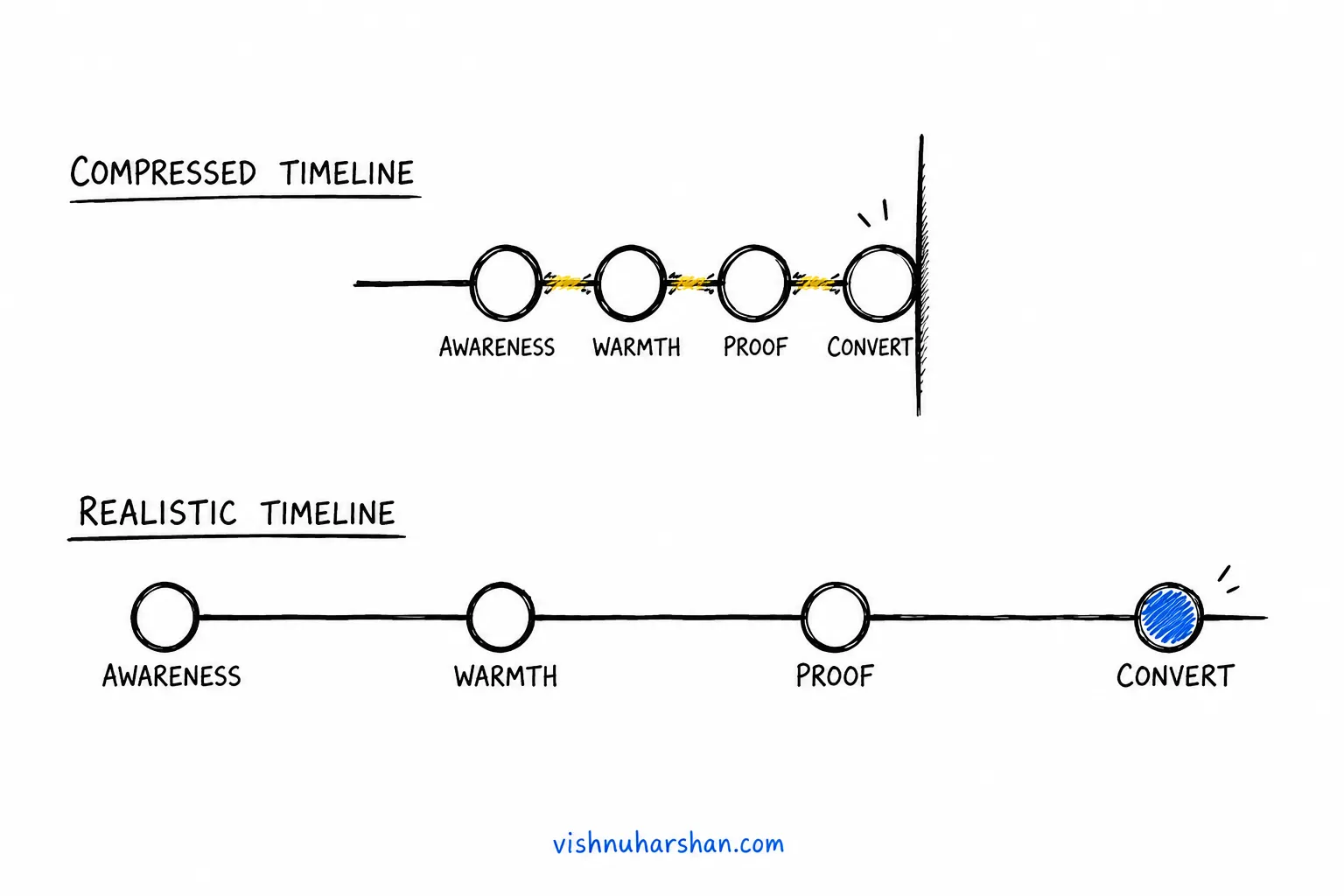
Why it matters: A tight timeline does more than lower your odds. It changes the economics of every campaign you run. When time is short, you push harder for fast conversions, and that usually buys you higher acquisition costs, lower-quality leads, and buyers asked to decide before they’re ready.
The campaign then looks like it failed. The timeline is what failed.
The honest question to sit with: If the launch date weren’t fixed, how much time would this offer genuinely need to reach the right people and convert at the right price?
Step 5: Is Your Volume Target Feasible?
The question: Given your current momentum, proof, and infrastructure, is the number of sales you need actually reachable?
This isn’t a question about ambition. Ambition is useful. It’s a question about the distance between where you are and what the target demands.
A target that’s possible in theory but depends on things you don’t have yet, like brand authority, an active audience, a team that can deliver at scale, or a long enough runway to generate the volume, isn’t a plan. It’s a hope wearing a plan’s clothes.
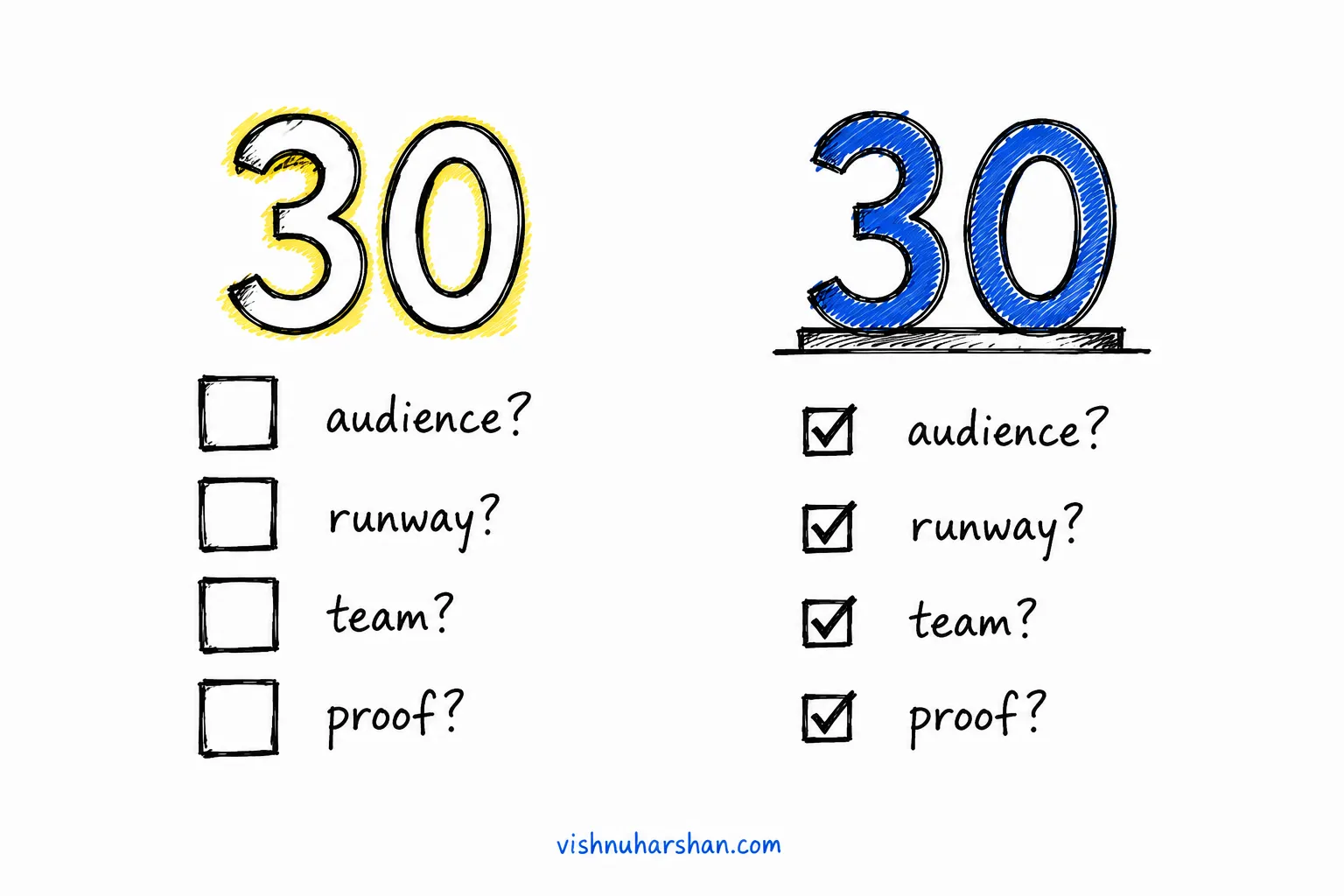
Why it matters: An unrealistic volume target does more than set you up for disappointment. It warps every decision downstream. Budget, hiring, venue booking, inventory all get sized for a number the current conditions can’t produce. The sales may never arrive. The costs already have.
The honest question to sit with: What would have to be true about your brand, your audience, and your runway for this target to be reachable? And how much of that is true right now?
Step 6: What Is the Proof Gap?
The question: What does your ideal buyer need to believe before they say yes, and do you have the evidence to build that belief?
Every high-ticket purchase asks the buyer to arrive at a chain of conclusions:
- That you understand their problem
- That your solution works
- That it has worked for people like them
- That you’re the right person to deliver it
- That the price is justified by the outcome
Each of those needs evidence behind it: testimonials, case studies, visible results, a body of work that shows how you think, a track record someone can see rather than take on faith.

Why it matters: When the proof gap is wide, when you’re asking buyers to trust claims you haven’t demonstrated, your marketing works harder and converts less. Better ads won’t close that gap. Closing the gap comes first.
The honest question to sit with: List the beliefs your buyer has to reach before saying yes. For each one, ask what proof you have today and where the holes are.
What To Do With the Answers
Work through these six steps honestly and you’ll land in one of three places.
The plan holds. Costs are understood, the price is justified by your current authority, the timeline is realistic, the volume target is reachable, and the proof is there. Market with confidence. The thinking is sound.
The plan needs adjustment. A step or two exposed a gap: a timeline that’s too tight, a target that’s too ambitious, a proof gap to close before launch. Fix it before you spend, and the campaign works harder for you.
The plan isn’t ready. The gaps are big enough that launching now means paying to discover a problem you haven’t solved. Address the foundation first. Close the proof gap, rebuild the timeline, revise the pricing, and launch once the conditions actually support it.
None of these is a failure. Every one of them beats finding the same problems three months and a serious budget into a campaign that was never going to work.
The Principle Underneath the Formula
Marketing isn’t the first step. It’s the step after the thinking.
When the thinking is clear, when costs are understood, pricing is honest, timelines are realistic, volumes are feasible, and proof is sufficient, marketing does its job. It finds the right people and gives them enough reason to act.
When the thinking is unclear, marketing won’t cover for it. It broadcasts it, loudly and expensively, usually at the worst possible moment.
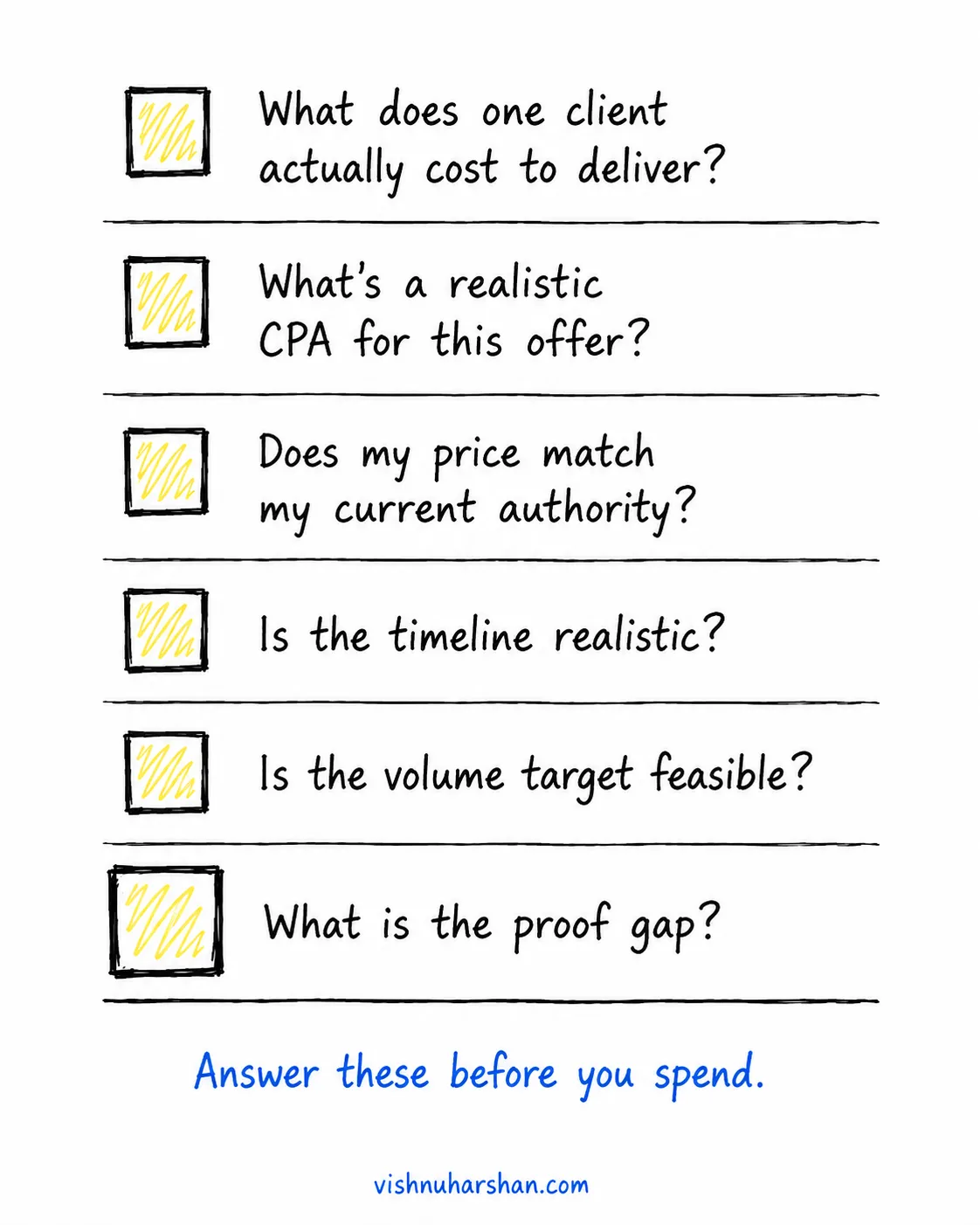
Run This Before Your Next Campaign
This formula isn’t a guarantee. It’s a checkpoint. The questions it raises are the ones your market will raise anyway, just later, and on your budget.
Answer them now instead.
If This Resonated, These Are Worth Reading Next
When the thinking holds and you’re ready to build:
- Google Ads Help: Create a Search campaign
- Meta Business Help: How Meta ad campaigns are structured
If This Resonated, These Are Worth Reading Next
The formula above is Thinking applied to numbers. These articles go deeper into where unclear thinking usually begins.
What a Good Brief Actually Reveals About Your Thinking: A recent example of this formula applied to a retreat leader in Melbourne.
The Hidden Cost of Partial Clarity in Marketing: What happens when the thinking is almost clear. Almost is where the problems hide.
Second-Order Consequences: How Small Marketing Decisions Create Long-Term Drift: The assumptions you don’t examine at the start show up as problems you can’t explain later.
The Moment Marketing Stops Working Is Never the Moment You Think It Is: Why the breakdown is almost never where founders think it is.
