


Ads don’t fail because they are invisible…
They fail because they are not felt. When your message expresses the offer but not its meaning, the right audience still sees it, and still has no reason to choose you over the next option. So they compare. And the comparison is decided on price.
Here’s what changed for a travel brand when we fixed articulation instead of targeting.
The Illusion of Performance
A travel brand I worked with was already running ads. Everything looked active: Campaigns were live, and Leads were coming in. But underneath:
- Lead quality was poor
- Conversations started with price
- Prospects had already spoken to competitors
Which meant the decision was being shaped before the lead ever came in.
When Marketing Becomes Comparable, you Have Already Lost
Looking at the travel industry made the issue clear. Every brand was saying the same thing:
- Destinations, Duration, and Offers
Different companies. Same expression.
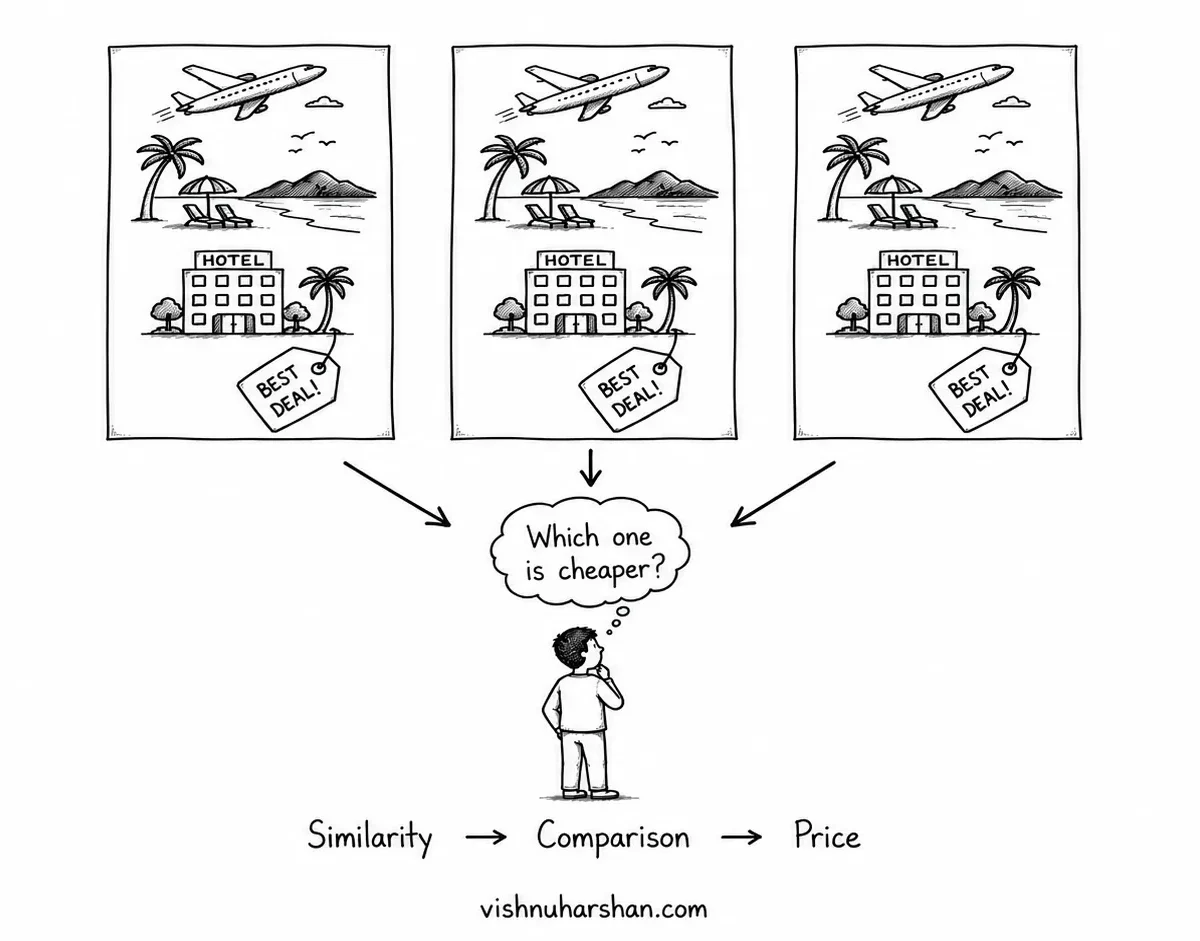
When articulation collapses into similarity, customers don’t evaluate; they compare. And comparison shifts everything:
- Price becomes the decision driver
- Conversations happen later
- Trust gets replaced by discounts
At that point, marketing doesn’t build preference. It creates pressure.
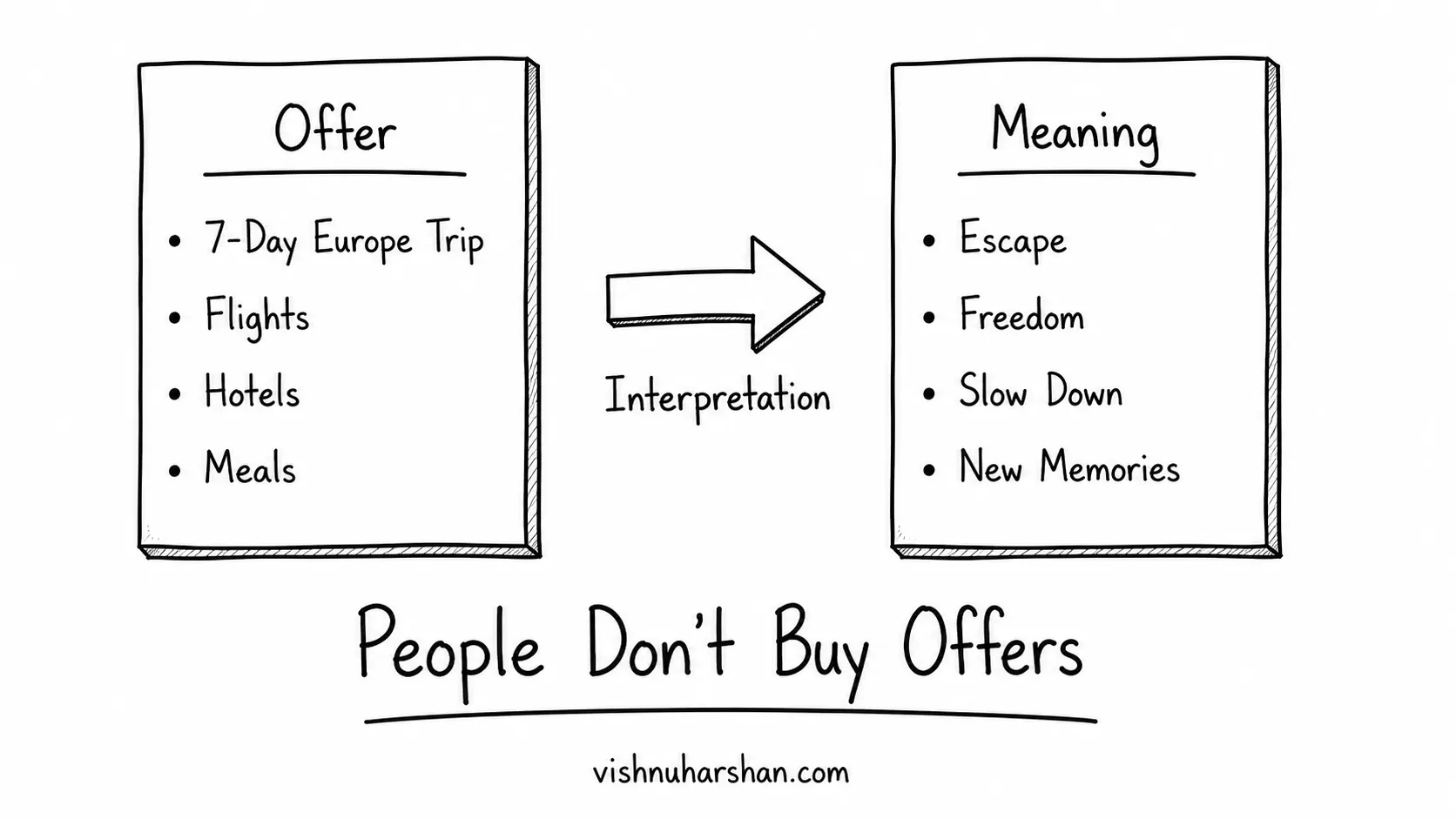
People Don’t Buy Offers. They Buy What Those Offers Mean.
Most marketing focuses on the offer, what’s included, how long it lasts, and what it costs. But decisions don’t start there. An offer is interpreted before it’s evaluated.
Take travel; A “7-day Europe trip” isn’t compelling on its own. It becomes meaningful when it represents something deeper:
- a break from routine
- a slower pace
- a different version of life
The trip is the structure. The meaning is the reason. When marketing communicates only the offer, it leaves meaning open. And when meaning is unclear… People compare!
But when meaning is articulated, the same offer feels different, because it has become recognizable. People don’t choose what they understand structurally. They choose what they recognize emotionally.
The Missing Layer in the Ads
This was the gap in the original campaigns. The ads were visible, but the meaning wasn’t. They showed what the trip was, but not why it mattered.
So the right audience saw the ads, but had no reason to respond to these ads specifically. And without that distinction, the only way forward was comparison.
The Shift: From Offers to Meaning
We didn’t change the audience. We changed what the audience could recognize. Instead of: listing destinations and highlighting deals
The ads began to express:
- emotional outcomes
- subtle contrasts (pace, space, experience)
- moments people could feel, not just evaluate
The goal wasn’t attention. It was alignment.
What Changed (Without Changing Much)
On the surface, very little changed: Same platform, Similar targeting, and Same core offer. But the articulation changed.
And that did something important: It filtered intent before the click. The right people leaned in earlier… The wrong ones filtered out naturally
The Outcome Was a Byproduct
Yes, cost per lead dropped. But that wasn’t the real shift. What actually changed:
- Conversations started earlier
- Leads came with clearer intent
- Price resistance reduced
The funnel didn’t just perform better. It became aligned.
Alignment + Articulation = Growth
This is where the principle becomes visible.
- Alignment clarifies what truly drives the decision
- Articulation makes that clarity recognizable

When either is missing, marketing feels active but inconsistent. When both are present, the response becomes natural.
The Question That Actually Moves Performance
If your ads are being seen but not converting, don’t ask: “What should I change in the campaign?”
Ask:
“What is my audience not recognizing in this message?”
Because until they see themselves in it, your marketing will remain something they notice… but never something they choose.
Ads Get Seen. But Response Comes from Recognition
Most marketers try to improve performance by increasing visibility. But results don’t come from being seen more. They come from being understood instantly. If you want to understand what shapes that recognition:
Where disconnection begins: Why your message reaches, but doesn’t land
Why visibility alone doesn’t convert: When attention doesn’t translate into response
- Why Good Content Still Fails to Get Referenced by ChatGPT
- Why Brands Can Publish for Years and Still Be Invisible
What creates recognition: When the message reflects the real reason people care
How alignment changes performance: When articulation filters intent before action
- Why Funnels Don’t Fix Marketing, They Reveal It
- Marketing in Practice: How Clear Thinking Turns Into Systems That Generate Growth
How response compounds: When clarity carries through the entire system
A simple perspective: Your audience isn’t ignoring your ads. They are not recognizing themselves in them. More reach increases visibility. Clear articulation creates a response. And growth happens when both align.
