


There’s a particular kind of frustration that’s hard to explain to anyone who hasn’t felt it.
You understand your business.
You know exactly what you do, why it matters, and who it’s for.
Ask you anything about it and you could talk for an hour without notes.
And yet, when you write it down, it falls flat.
The words are accurate. The offer is real. But something doesn’t land. People nod, say it sounds interesting, and don’t act.
This isn’t a Thinking problem. The Thinking is fine.
It’s an articulation problem, and it’s one of the most common, least understood gaps in marketing.
I know this gap personally.
I lived inside it for years before I had the language to describe it.
What I Was Actually Doing, And What I Called It
For a long time, I helped people with marketing. That’s how “I” described it.
Funnels, advertising, growth strategy: the usual language.
But that’s not actually what I was doing.
When I sat with a founder, I used a scientific approach.
I had put the lens where the problem appeared to be, usually a campaign, a channel, a conversion rate, and trace it backward.
Symptom to cause.
Cause to decision.
Decision to the thinking behind it.
And almost every time, the trace landed in the same place…
Not the funnel. Not the ad. The thinking.
I was doing diagnostic work. Root-cause work. But I was calling it marketing help!
The Cost of That Gap
Here’s what that mismatch produced.
Clients found me because they had a “marketing problem” or thought they did.
They expected a funnel fix, a campaign overhaul, better ads. That’s what my positioning told them I did.
What they got was something different…
A conversation that didn’t start with tactics.
Questions about their audience, their pricing, their positioning: things that felt unrelated to what they had hired me for.
The work was valuable!
Often more valuable than what they had asked for.
But it arrived as a surprise, because my language hadn’t prepared them for it.
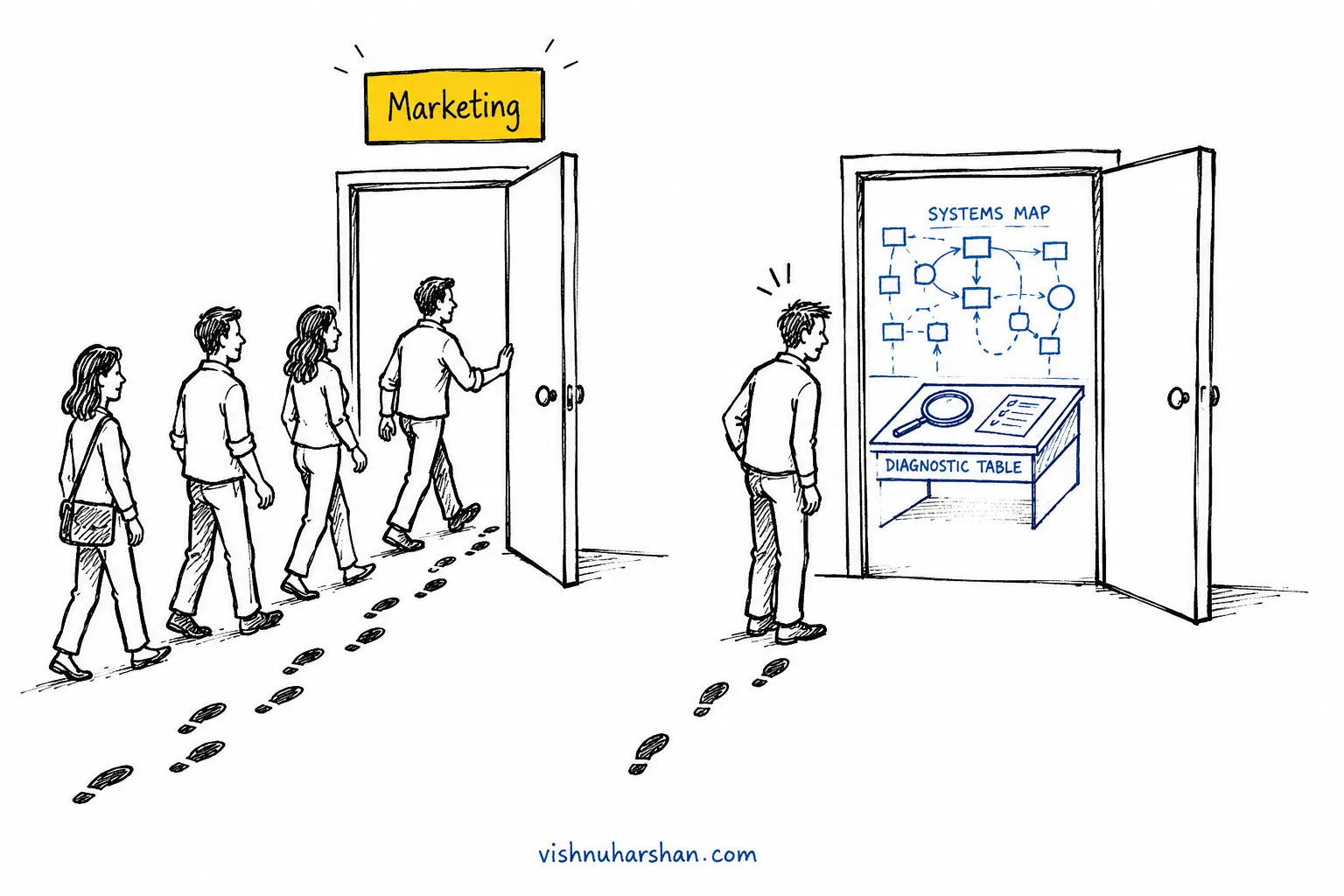
Some clients leaned in immediately!
They recognised they needed the deeper conversation. Others were confused, even resistant.
They came looking for a tactic and instead found a mirror.
That inconsistency wasn’t a client problem. It was an articulation problem.
My positioning said “marketer.” My actual work was something else entirely.
And the people who found me were responding to the words, not the work.
How Alignment & Articulation Was Born
The shift didn’t happen as a rebrand. It happened as a realisation!
I was already doing the thinking work. I just didn’t have language for it.
“I help with marketing” was accurate in the sense that marketing was where the symptoms showed up.
But it wasn’t accurate about where the work actually happened, which was earlier, in the founder’s thinking about who they serve, what they are offering, and why…
Alignment & Articulation wasn’t a new service. It was the description that finally catching up to the work.
Alignment: the clarity about who you serve, what you offer, and why it matters.
Articulation: translating that clarity into words, positioning, and communication that actually carries it.
Growth: what happens when both are in place.
I had been doing all three for years.
I just hadn’t named them!
And because I hadn’t named them, the people who found me didn’t know what they were actually getting 😀
Why This Happens to Founders With Clear Thinking
If you have built something real, a business, an offer, a way of working that genuinely helps people, you almost certainly understand it better than your current copy expresses it.
This isn’t because you are a bad writer. It’s because of where the clarity lives.
Your understanding of your offer lives inside years of context.
Every customer conversation, every problem you have solved, every adjustment you have made based on what actually works.
When you talk about your offer, all of that context is present, even if it’s not spoken aloud.
It shapes your tone, your confidence, your timing!
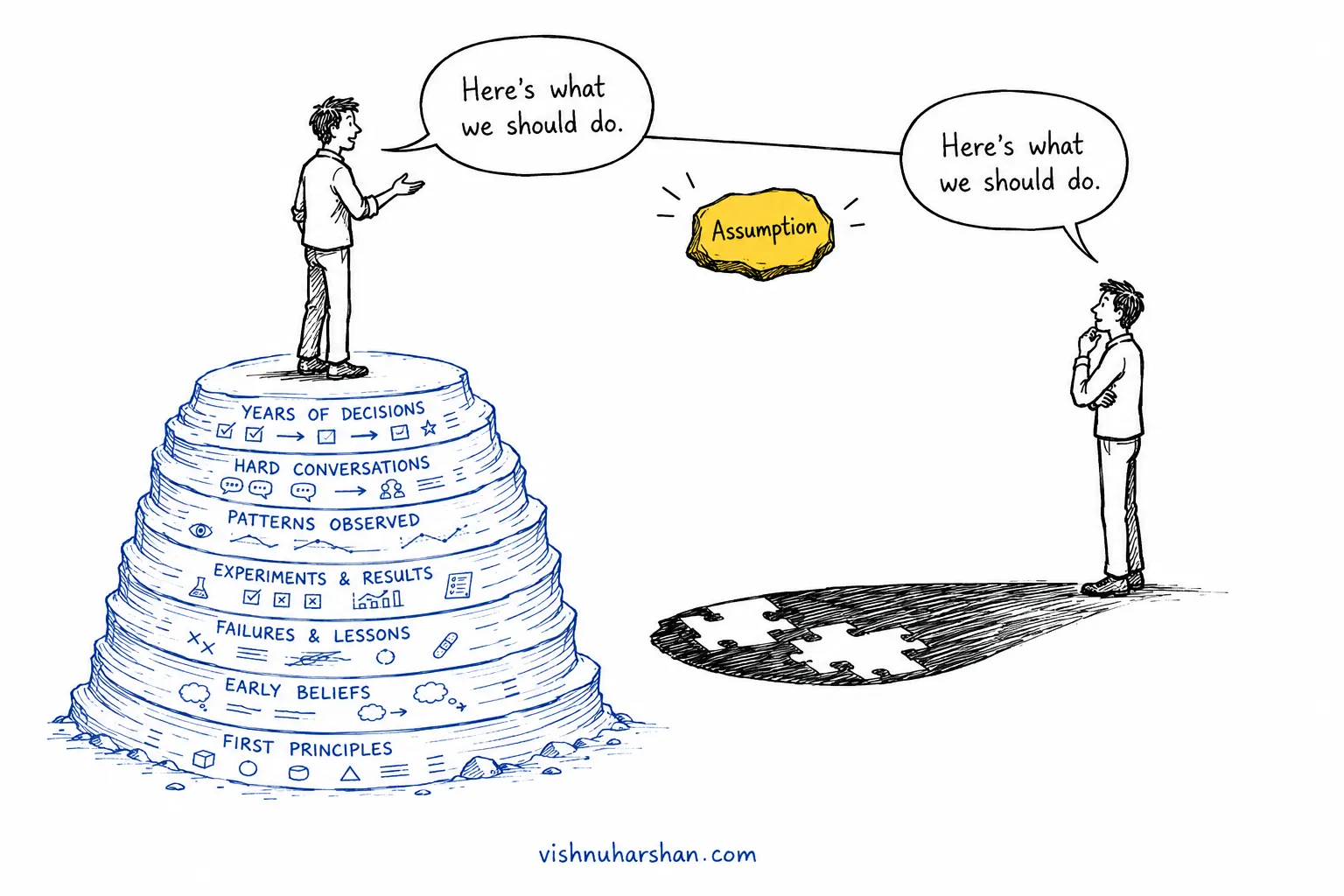
None of that context exists for the person reading your website for the first time…. (a moment of silence)
So when you write from inside that context, you write accurately, but you write for someone who already understands.
The reader doesn’t have that. They need the words to do work that, in your head, is already done.
This is why founders often describe their copy as “fine” or “accurate” but admit it doesn’t seem to move anyone.
The words are correct.
They are just incomplete for someone standing outside the understanding you have already built.
What Closing the Gap Actually Looks Like
Closing this gap isn’t about writing better sentences.
It’s about translating internal clarity into language that works for someone who doesn’t yet have that clarity.
That means describing the problem the way your buyer experiences it, not the way you have come to understand it after years of pattern recognition.
It means naming the thing that changes for them, not just describing what you do.
It means using language that reflects where they are now, not where you eventually help them get to.
For me, that meant moving away from “I help with marketing”, accurate but incomplete, toward language that named what I was actually doing!
Helping founders see that their marketing problems were thinking problems.
That’s a different sentence. It attracts a different person. And it sets a different expectation for the work that follows.
The Question Worth Asking About Your Own Copy
If your thinking is clear but your copy isn’t converting, the question isn’t “is this well written?”
The question is:
Does this language reflect what I actually understand, or does it reflect an earlier, less developed version of how I describe what I do?
Most founders’ positioning lags behind their actual expertise.
The business has evolved. The understanding has deepened.
But the words on the website are from an earlier stage, before the clarity that’s now second nature to you had fully formed.
That lag is invisible to you, because you have stopped noticing your own language.
It’s not invisible to the person reading it.
They are responding to the words exactly as written, and the words are describing a business that no longer fully exists!!
Where to Start Fixing It
The fix isn’t writing better. It’s starting from a different place.
Before you touch a single sentence, write down what your reader believes, knows, and feels before they land on your page.
Not what you want them to believe after reading it.
What’s actually true for them right now, before they have encountered you at all.
Then look at your current copy and ask:
Does this speak to that starting point, or does it assume the reader is already further along than they actually are?
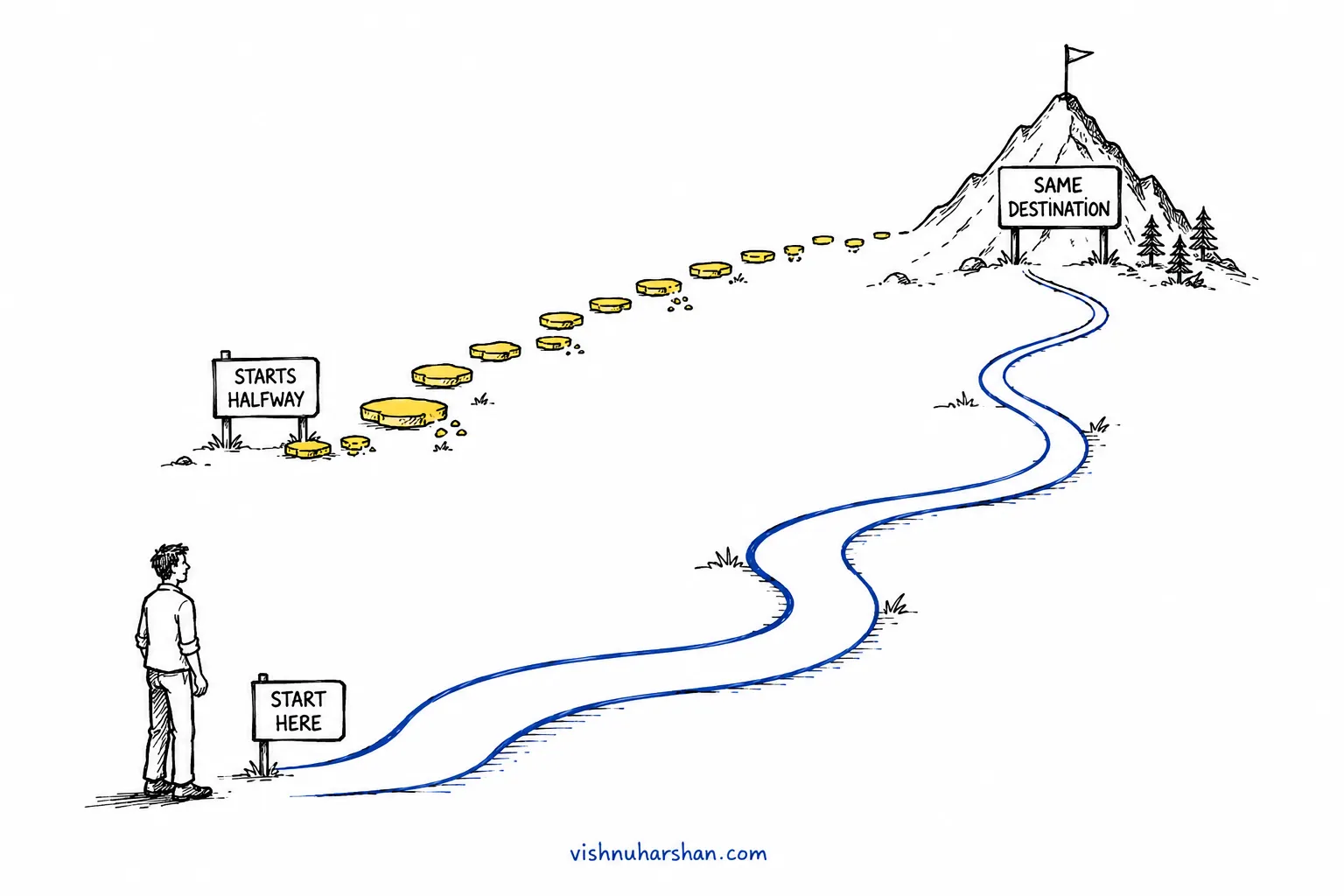
Most copy that “sounds fine but doesn’t convert” makes that second mistake.
It speaks to someone who already understands the problem the way you do, who already trusts the solution, who’s already most of the way to a decision.
But the actual reader is earlier than that.
They haven’t made the leaps you have made.
The copy is talking past them, not to them.
The gap between those two things, where your reader actually is and where your copy assumes they are, is usually where the real rewrite needs to happen.
Not in stronger adjectives. Not in a better call to action. In backing up to meet the reader where they currently stand.
This is also often the hardest thing to see in your own writing.
The very clarity that makes your thinking sound is what makes it difficult to spot where that clarity has outrun your reader.
An outside perspective, someone who can read your copy without the years of context you bring to it, tends to see this gap immediately!!
If This Resonated, These Are Worth Reading Next
Articulation is the bridge between clear thinking and results that reflect it !!
These articles explore both sides of that bridge.
Why Positioning Clarifies Execution: Positioning is the constraint that makes articulation possible in the first place.
Before You Spend on Marketing, Reverse-Engineer This: A formula for checking whether your thinking is sound before you spend on marketing.
The Hidden Cost of Partial Clarity in Marketing: What happens when your thinking is almost clear. Almost is where the problems hide.
Your Audience Is a Reflection of Your Thinking: The people your current language attracts tell you something about the language itself.
The Moment Marketing Stops Working Is Never the Moment You Think It Is: Why breakdowns trace back further than the metric that revealed them.
