


Tactic Culture is eating your marketing.
Not loudly. Not in a single dramatic moment.
It eats slowly, one borrowed idea at a time, until a founder who started with a real, specific business ends up running a version of everyone else’s marketing instead of their own.
You know Tactic Culture even if you have never called it that. It’s the constant stream of “what’s working right now.”
The hook that got someone else 10,000 views. The funnel template a guru swears by. The ad format a competitor is using… The price point a bigger brand charges. The post that says “stop doing X, start doing Y” with no context about your business at all…
Each piece of it seems harmless. Useful, even. Tactic Culture’s danger isn’t any single tactic. It’s what adopting tactic after tactic, without examining whether they fit, does to a business over time.
What Tactic Culture Actually Is
Tactic Culture is the environment that treats marketing as a library of techniques to be borrowed, rather than a system that has to fit the specific business it’s attached to.
It lives in Facebook groups, in “5 hooks that convert” posts, in agencies that pitch the same funnel to every client, and in founders trading tips like recipes. It’s not any one source. It’s the cumulative effect of all of them, repeated often enough that they start to feel like common sense.
The promise of Tactic Culture is speed.
Why think through your positioning from scratch when someone else has already found what works? Why spend weeks on clarity when there’s a template that’s proven?
The problem is that “what works” is almost always missing its context.
It worked for a business with a different cost structure, a different audience, a different stage of brand authority, and a different timeline. Strip the context away, and what’s left isn’t a working tactic; it’s a tactic that worked somewhere else.
Why It Feels So Reasonable
Nobody adopts Tactic Culture on purpose. It arrives one decision at a time, and each decision feels small.
- You see a competitor running a certain kind of ad, so you try something similar.
- You read that short-form video is ‘what’s working now, so you shift your content there.
- You hear that a certain price point is achievable because someone else is charging it, so you set your price near there too.
- You see a funnel structure that a successful brand uses, so you build something close to it.
- None of these feels like abandoning your own “thinking”. They feel like “learning” from what’s working.
That’s exactly what makes Tactic Culture so effective at eroding a business’s foundations: it never asks you to believe something false. It just asks you to borrow, repeatedly, until the borrowed pieces outnumber the parts that were actually yours.
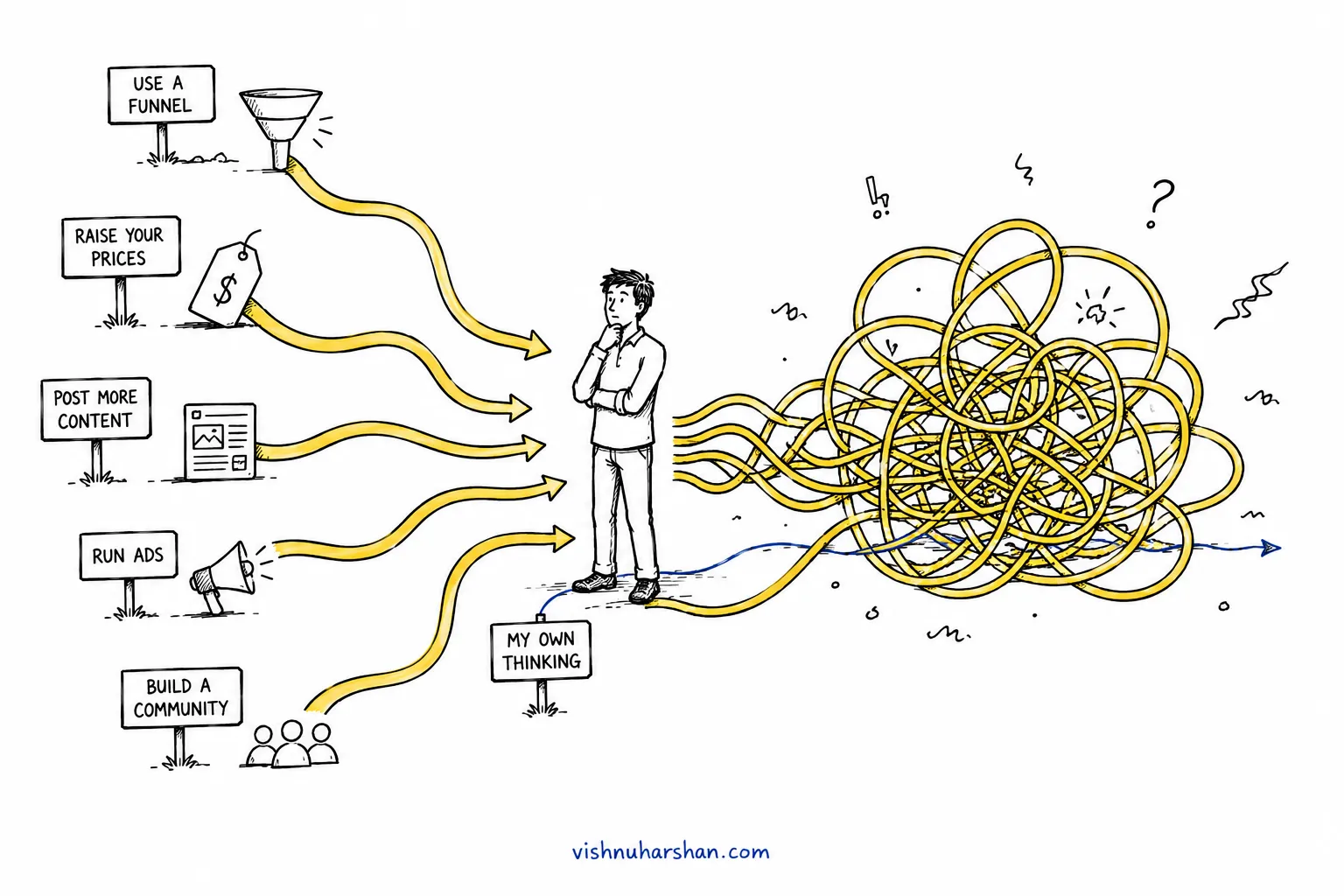
There’s a pull most founders recognise, the urge to try the new thing the moment it appears, sometimes called shiny object syndrome. That pull is real. But it’s not a personal failing.
It’s the predictable response to an environment that’s constantly manufacturing ‘new things’ to pull you toward. Tactic Culture doesn’t just offer tactics.
It manufactures the urgency that makes them hard to ignore.”
The Compounding Problem
Here’s what makes Tactic Culture different from a single bad decision. A single bad tactic is a cost. You try it; it doesn’t work; you move on. That’s normal, and it’s not the problem. The problem is that tactics borrowed from Tactic Culture don’t compound.
Compounding requires consistency: the same positioning, the same audience understanding, the same message, refined and repeated until it builds momentum.
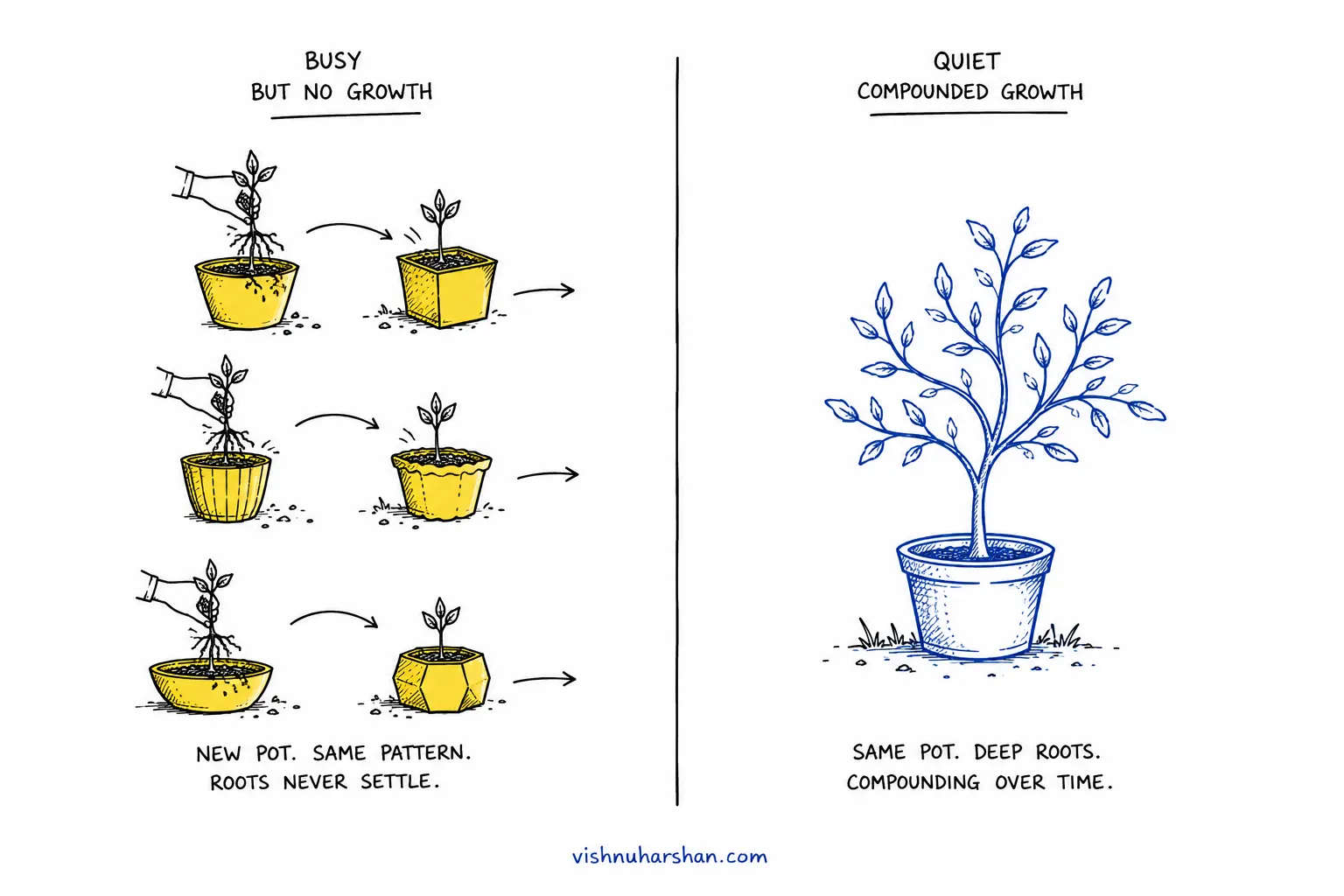
Tactic Culture works against this by design. Its entire premise is that there’s always something newer, faster, more ‘working right now’ than what you are currently doing.
So a founder operating inside Tactic Culture is constantly starting over. New hook this month. New funnel structure next month. New price point after that…
Each one might be reasonable in isolation.
But none of them get the time needed to actually compound, because by the time they might start working, attention has already moved to the next thing. This is why so much marketing activity produces so few durable results.
It’s not that the founder isn’t working hard. It’s that the work keeps resetting before it has a chance to build on itself.
What Tactic Culture Looks Like in Practice
These patterns show up across very different businesses. On the surface, each looks like its own problem. Underneath, it’s the same one.
Borrowing Someone Else's Numbers
A retreat facilitator in Melbourne wanted to charge $2,200 per person and fill 30 seats for a retreat 77 days out. Why did those numbers feel achievable to her?
Because other people in her space were charging that, filling retreats at that size, on similar timelines. She wasn’t wrong that it was possible.
She was borrowing someone else’s brand authority, someone else’s audience warmth, someone else’s momentum, and applying it to a business that didn’t have those things yet!
Borrowing Someone Else's Funnel
An interior designer in the US came to me with a funnel that wasn’t converting leads. He had paid $497 for it, a template built and sold by a marketing guru, marketed as the funnel behind a “million-dollar” business.
The problem wasn’t the build quality.
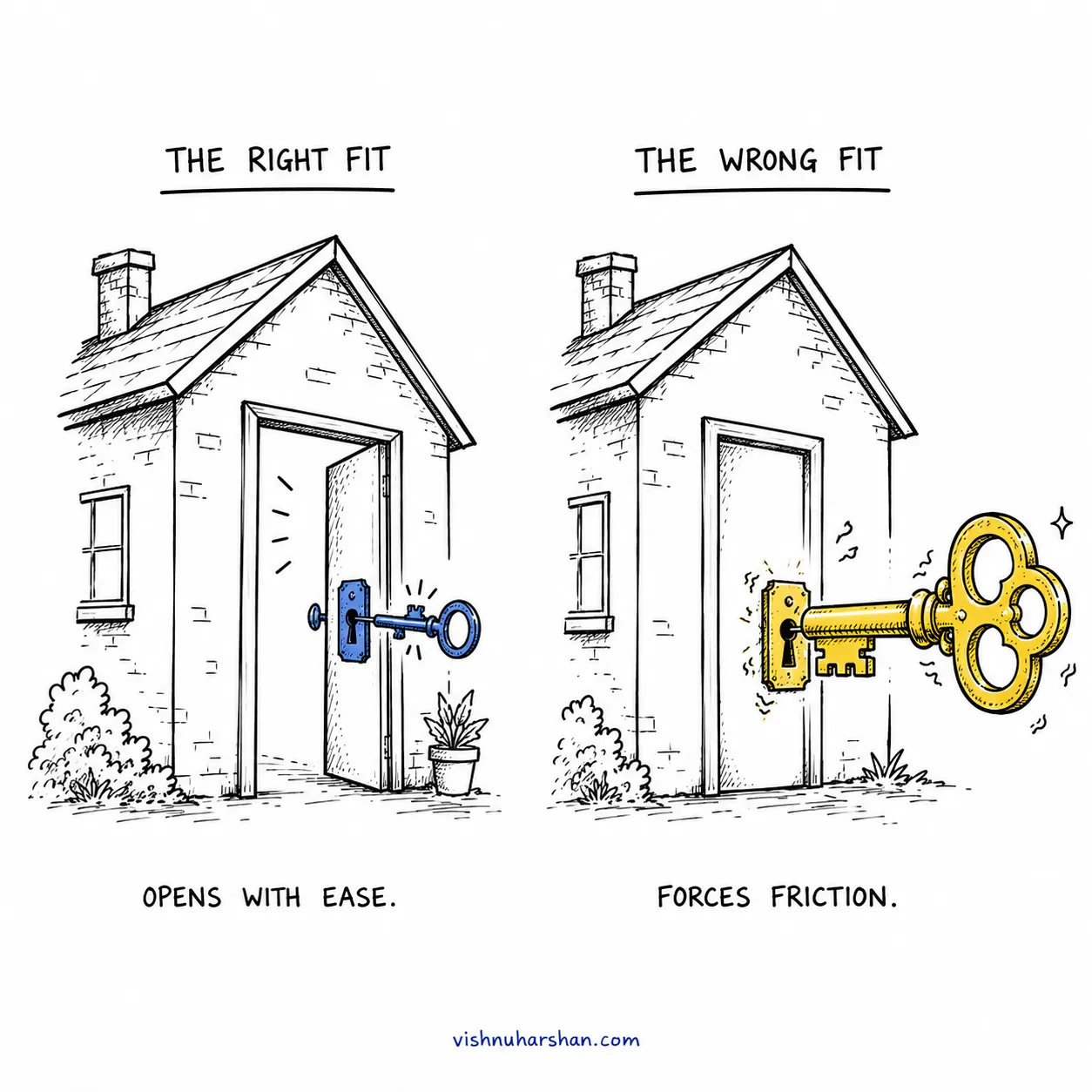
The funnel was designed to sell a consultation call for a coaching business. He was running a design practice, where the buying decision, the trust required, and the next step a prospect needed to take were all different.
The template worked exactly as designed. It just wasn’t designed for him…
Borrowing the Assumption That a Funnel Is Always the Answer
An education consultant specialising in BS/MD admissions built a funnel because that’s what ‘real’ marketing looked like: multiple steps, automated sequences, the works.
When we examined it, the funnel was adding friction that her audience didn’t need. Parents researching BS/MD admissions are already deep into research mode by the time they find her.
They don’t need to be funnelled. They need a direct, clear path to a conversation. We removed the funnel entirely! The simpler path converted better, because it matched how her audience actually made decisions, not how a funnel template assumed they would.
In each case, the borrowed piece, a price point, a funnel template, and the assumption that a funnel is always the answer were reasonable on their own terms. It just wasn’t examined against the business it was being applied to.
The Way Back to Compounding
Escaping Tactic Culture doesn’t mean ignoring everything happening around you, or refusing to learn from what others are doing. That’s not realistic, and it’s not the point. It means three things, in sequence.
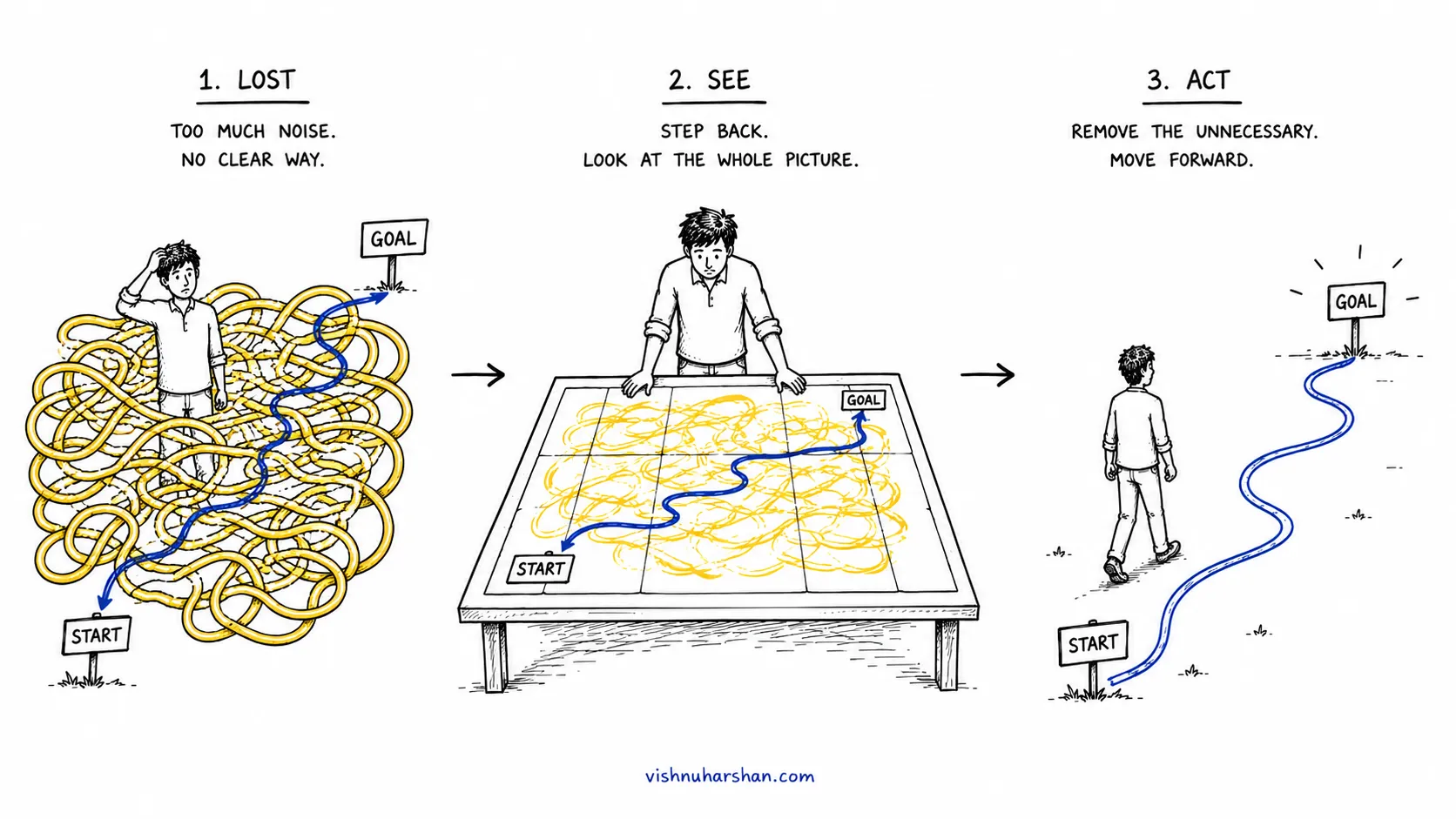
1. Name It
The first step is recognising Tactic Culture for what it is: an environment, not a resource. Founders experience its effects without ever identifying the cause. Marketing feels inconsistent. Results don’t build. Every few months, there’s a new approach, and the previous one quietly gets abandoned.
Without a name for what’s happening, this just feels like marketing is hard or I haven’t found the right approach yet. You now have that name.
Which means the next time you feel the pull toward something because it’s ‘what’s working now,’ you will have a lens you didn’t have before reading this. That recognition itself is the pause!
Not a permanent objection, just a moment to notice where the idea came from before deciding what to do with it. Awareness doesn’t fix anything by itself, but nothing else is possible without it. And now, you are looking through this lens.
2. Think in First Principles
Once you’ve noticed the pull, go back to the foundation instead of the surface. Tactics are surface expressions of something underneath: positioning, market awareness, emotional resonance, and narrative coherence, which is why borrowed strategies stop working once you take them out of the business they came from.
Borrow the surface without rebuilding the foundation, and friction is inevitable.
In practice, this means asking what a tactic is actually built on before adopting it. Someone else’s price point isn’t what I should charge; it’s a prompt to ask what your price would need to be, given your actual costs, and whether that’s justifiable given your current brand authority.
Someone else’s content format isn’t what I should post; it’s a prompt to ask whether that format suits what your audience actually needs from you right now.
Every tactic that enters your business from outside should pass through this question before it’s adopted. Not rejected by default, not adopted by default, but examined against your own foundation.
3. Trace the Second-Order Consequences
The third step is looking past what a decision does now to what it sets in motion. A borrowed tactic usually looks fine at first. It ran, it got some engagement, it didn’t obviously fail.
What takes longer to surface is what it trained your audience to expect, what it did to your positioning, and what it cost you in consistency. Those effects arrive late, one small reasonable decision at a time.
The second-order effects, what it trains your audience to expect, what it does to your positioning, and what it costs you in consistency- take longer to surface. This is where the compounding problem and second-order consequences meet.
Examined decisions accumulate, because each one was designed for what came before it. Borrowed ones replace what came before, and a business that keeps replacing never finds out what it’s like when things are allowed to build.
Where This Leaves You
Tactic Culture isn’t going anywhere. The next ‘what’s working now’ post is already being written. The next template, the next hook, the next funnel someone swears by- all of it will keep arriving, because that’s what the environment is built to do.
What’s changed is that you now have a name for it, and a sequence for what to do when it shows up. Notice it. Trace it back to first principles. Consider what it sets in motion before you adopt it.
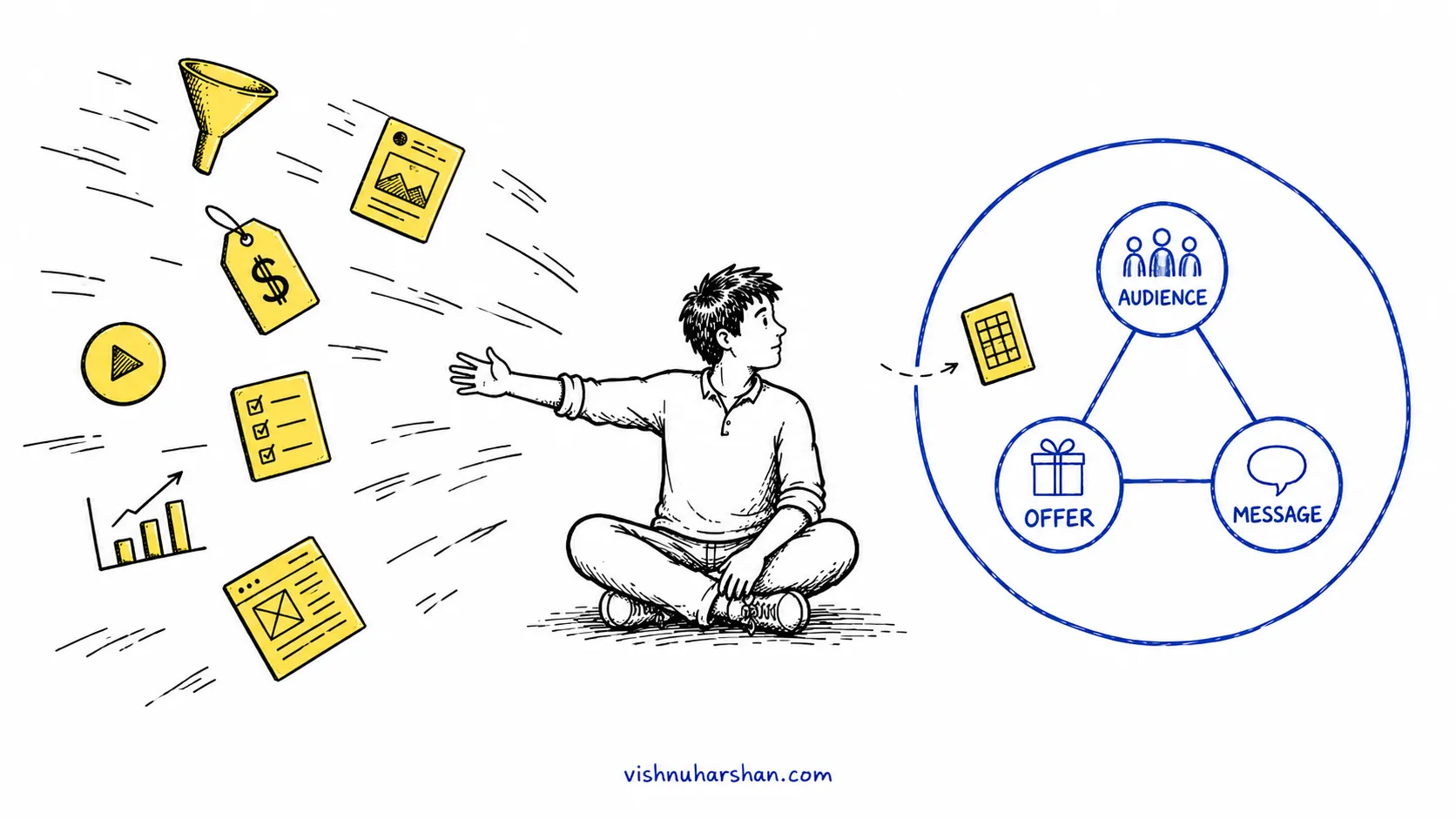
None of this makes marketing easier in the short term. It’s slower. Every shortcut you stop to examine is a shortcut you don’t get to take. What changes is that things start building on each other instead of starting over.
And when the next tactic shows up, you will find yourself asking whether it’s actually yours before you ask whether it works.
If This Resonated, These Are Worth Reading Next
These articles explore different parts of the same problem, what happens when thinking is borrowed instead of built, and what it takes to build your own
Before You Spend on Marketing, Reverse-Engineer This: A formula for examining whether your numbers actually fit your business before you spend.
What a Good Brief Actually Reveals About Your Thinking: A retreat leader’s plan, and the borrowed assumptions a brief surfaced.
The Hidden Cost of Saying Yes to the Wrong Client: What happens when an engagement is shaped by panic rather than patience.
Why Founders Who Think Clearly Still Write Copy That Doesn’t Convert: How borrowed language can describe work that no longer matches what’s actually being done.
